
How to Shrink a Swimsuit Safely and Restore Perfect Fit
There is nothing worse than pulling out your favorite, go-to bathing suit only to realize it looks completely stretched out and baggy. Whether it’s a pricey piece that arrived a size too large or an older favorite that has lost its snappy synthetic fibers elasticity due to constant chlorine and fabric damage, an ill-fitting suit is a major confidence killer.
If you want to make your swimsuit tighter, you can absolutely do it.
In this quick guide, you will learn exactly how to shrink a swimsuit that’s too big without ruining the material.Let’s dive right in.
Pre-check the Care Label & Fabric Composition
We have all been there. You find the perfect bikini or one-piece, only to realize it is a bit too loose or has stretched out after a few swims. Before you try to make a swimsuit tighter, you must check the care label.
Skipping this step can completely ruin your swimwear. Different synthetic fibers react differently to heat, and knowing what your suit is made of determines whether you can safely shrink it.
Why the Label Matters? The care label is your roadmap. It tells you exactly what fabric blend you are working with and the maximum heat it can tolerate. Because shrinking a swimsuit requires controlled heat, guessing the fabric composition can lead to melted fibers, warped elastic, or a completely destroyed suit.
Source: ISO 3758:2023 – Textiles: Care Labelling Code Using Symbols.
1.Nylon & Spandex Blends
Most modern swimwear relies heavily on a nylon and spandex blend. These synthetic fibers give your suit its signature stretch and body-hugging fit.
- Heat Sensitivity: High. Spandex begins thermal degradation at approximately 85 °C (185 °F). Keep water temperature between 60–80 °C (140–176 °F) for safe shrinkage.
- Shrinkage Potential:Moderate (0.5–1.5 sizes). You can achieve a tighter fit, but you must use precise, controlled temperatures to avoid destroying the synthetic fibers’ elasticity.
2.Polyester
Polyester is highly durable and often used for competitive swimwear due to its chlorine-resistant fabric properties.
- Heat Sensitivity: Medium-low. Polyester’s glass transition temperature is approximately 67–81 °C (153–178 °F), but it does not soften significantly until around 100 °C (212 °F).
- Shrinkage Potential: Low to Medium (0.25–0.75 sizes). Because it is designed for maximum shape retention, shrinking a polyester swimsuit takes more effort and higher temperatures than nylon blends.
3.Natural Blends (Cotton/Ribbed)
Some fashion swimwear features natural blends, such as cotton-ribbed fabrics or terry cloth mixed with synthetics.
- Heat Sensitivity: Low. Natural fibers can handle higher heat than pure synthetics, tolerating water up to 95 °C (203 °F) without structural damage.
- Shrinkage Potential: High (1–2 sizes). If your suit has a high percentage of cotton, it will shrink much faster and more significantly than purely synthetic options. Always proceed with caution to avoid over-shrinking.
4 Safe Methods to Shrink Your Swimsuit at Home
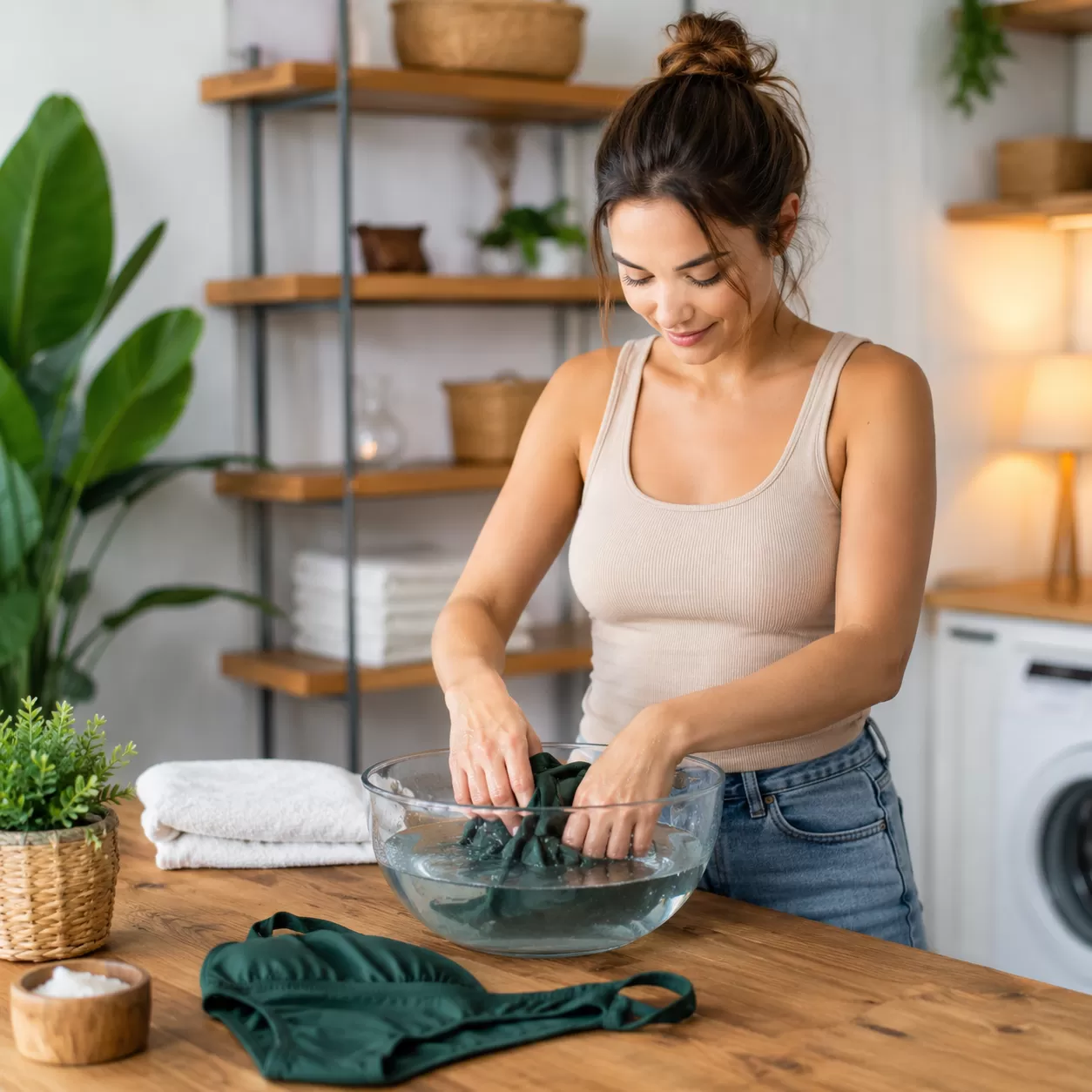
If your favorite bikini or one-piece is a bit too loose, you don’t have to replace it just yet. You can easily fix a swimsuit that’s too big by using controlled heat to tighten the fabric.
Because most swimwear is made of synthetic fibers, precision is key to avoiding damage. Here are four reliable ways to safely shrink your swimsuit at home.
Method 1: The Boiling Water Soak [Best for Uniform Shrinkage]
The boiling water method is ideal if your entire swimsuit is loose and needs an all-over size reduction.
- Bring water to a boil: Fill a large pot with enough water to fully submerge the swimwear, then bring it to a rolling boil.
- Soak the suit: Turn off the heat source and place the swimsuit into the hot water. Use a wooden spoon to press it down completely.
- Time it right: Leave nylon and spandex fabric in the water for 10 to 15 minutes. For a polyester swimsuit, extend the time to 20 to 25 minutes as polyester resists heat more effectively.
- Cool and dry: Carefully remove the suit, let it cool completely, and lay it flat on a clean towel to dry.
Method 2: The Controlled Dryer Method
If you are looking for how to shrink a swimsuit quickly, using a household clothes dryer is your best bet for fast, even results.
- Step 1: Wash the swimsuit in the washing machine using a warm water cycle.
- Step 2: Place the wet suit inside a mesh laundry bag to protect the delicate straps and hardware from snagging.
- Step 3: Toss the bag into the dryer and set it to medium-high heat.
- Step 4: Run the cycle for 20 minutes, checking the suit every 5 minutes to monitor the progress and prevent the synthetic fibers from melting.
Method 3: The Target Iron Technique [Best for Specific Loose Areas]
When only the butt, bust, or waist area is stretched out, you don’t want to shrink the entire garment. The target iron technique lets you focus heat exactly where you need it.
| Step | Action | Key Detail |
|---|---|---|
| 1 | Prep the surface | Lay the clean, damp swimsuit flat on an ironing board. |
| 2 | Add protection | Place a thin protective towel or cotton cloth directly over the loose section. Never let the iron touch bare swimwear fabric. |
| 3 | Apply heat | Set your iron to a medium heat setting with the steam turned off. |
| 4 | Press down | Move the iron in smooth, circular motions over the towel for 1 to 2 minutes, checking the fit frequently. |
Method 4: The Hair Dryer Method
If you want to know how to shrink a swimsuit without a dryer while maintaining total control over the process, a standard hair dryer works beautifully.
- Soak the suit: Submerge the swimwear in hot water for 10 minutes to prep the fibers for shrinkage.
- Remove excess water: Gently press the suit between two dry towels. Do not wring or twist the fabric, as this ruins the synthetic fibers’ elasticity.
- Hang and blow dry: Hang the damp suit on a plastic hanger. Set your hair dryer to its high heat setting.
- Focus the airflow: Hold the dryer 6 inches away from the fabric and move it continuously over the loose areas until the suit is completely dry. This technique delivers maximum swimwear shape retention without the rough tumbling of a machine.
Source: ASTM D5489 – Standard Guide for Care Symbols for Care Instructions on Textile Products; Textile Research Journal, Vol. 91, 2021.
Expected Shrinkage Results by Methods
The following table summarizes the expected outcomes for each method based on fabric type. Use this as a quick reference to choose the right approach for your swimsuit.
|
Method |
Nylon/Spandex |
Polyester |
Cotton Blend |
|
Boiling Water Soak |
0.5–1 size |
0.25–0.5 size |
1–1.5 sizes |
|
Controlled Dryer |
~0.5 size |
~0.25 size |
0.5–1 size |
|
Target Iron |
0.5–1 cm local |
0.25–0.5 cm local |
0.5–1.5 cm local |
|
Hair Dryer |
0.25–0.5 size |
Minimal |
0.25–0.5 size |
Source: Estimates based on AATCC Test Method 135 dimensional change data and common swimwear fabric compositions (80/20 nylon-spandex, 100% polyester, 60/40 cotton-lycra).Note: Actual results depend on the garment’s age, prior wear, construction quality, and exact fabric blend. These figures represent typical outcomes under controlled conditions and should be treated as approximations, not guarantees.
Mistakes That Ruin Swimsuit
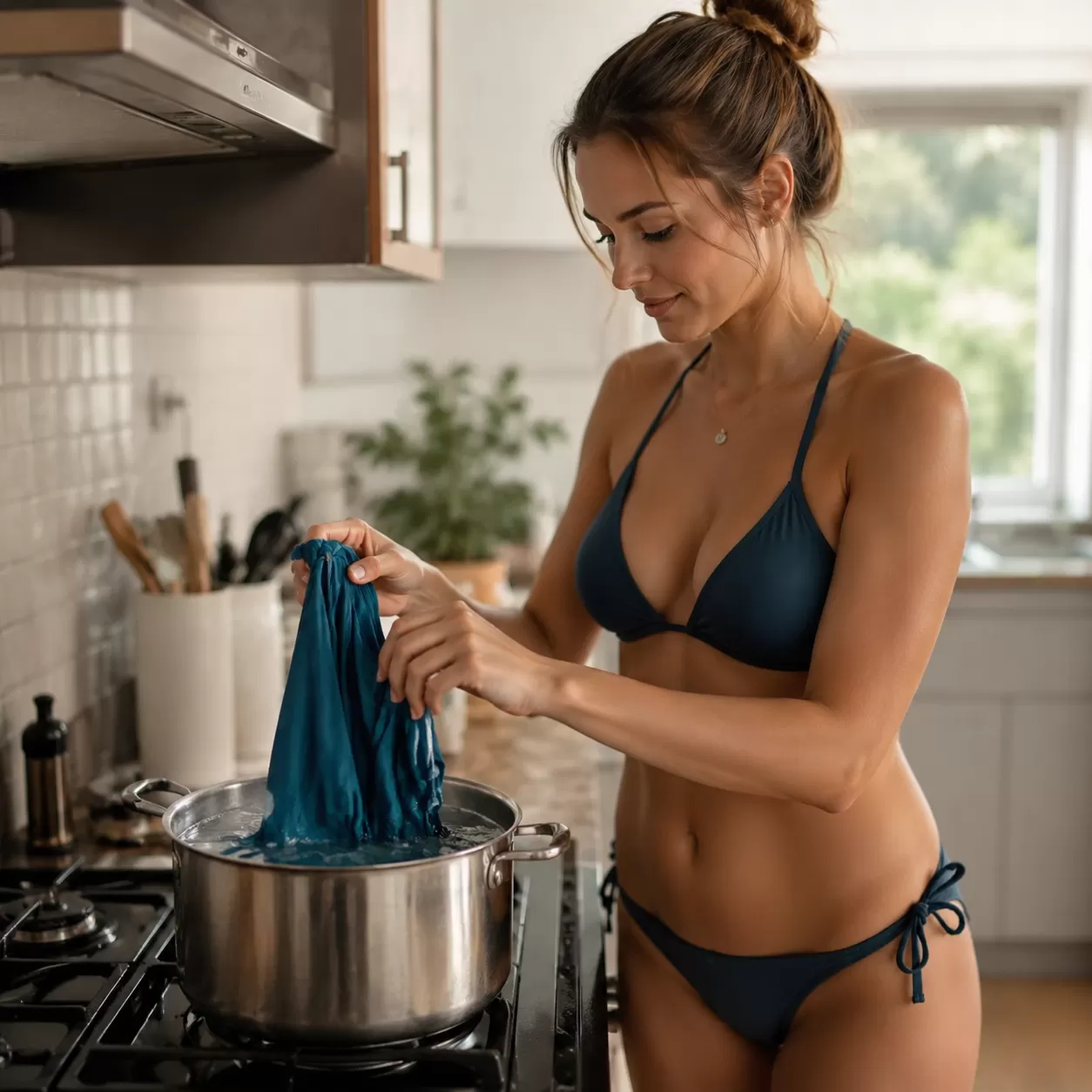
When you are figuring out how to shrink swimsuit fabrics that are a bit too loose, it is incredibly easy to take things a step too far. One wrong move can permanently destroy the synthetic fibers’ elasticity, leaving you with a completely stretched out bathing suit instead of a tighter fit.
To protect your swimwear, avoid these three critical mistakes at all costs.
a)Direct High Heat Exposure
While heat is the secret to shrinking fabric, direct and uncontrolled high heat will melt the delicate elastane fibers.
- Never use a heat gun or direct blowtorch: This will literally liquefy the synthetic material.
- Avoid high-heat iron settings: Placing a hot iron directly onto naked spandex and nylon fabric will burn holes right through it.
- Skip the commercial laundromat dryer: These industrial machines run much hotter than household units and can easily warp your suit’s shape.
b)Wringing and Twisting
It is natural to want to squeeze out excess water after a boiling water method soak, but aggressive wringing is a guaranteed way to ruin your swimwear shape retention.
Warning: Twisting, wringing, or pulling the fabric while it is hot snaps the internal elastic bonds. Once those micro-fibers break, the suit will lose its stretch permanently, and there is no way to fix a swimsuit once the elasticity is gone.
Instead, lay the suit flat on a clean towel, roll the towel up like a burrito, and press down gently to absorb the moisture.
c)Drying in Direct Sunlight
Leaving your swimsuit to dry outside on a hot, sunny deck might seem like a quick way to shrink it, but UV rays are incredibly destructive.
- Color Fading: Direct sunlight bleaches vibrant colors and patterns within hours.
- Fiber Degradation: Intense UV light breaks down the chemical bonds in nylon and polyester, making the fabric brittle and loose.
- The Bottom Line: Always dry your swimwear indoors or in a shaded, well-ventilated area to maintain fabric integrity.
Alternative Solutions: No-Heat Hacks
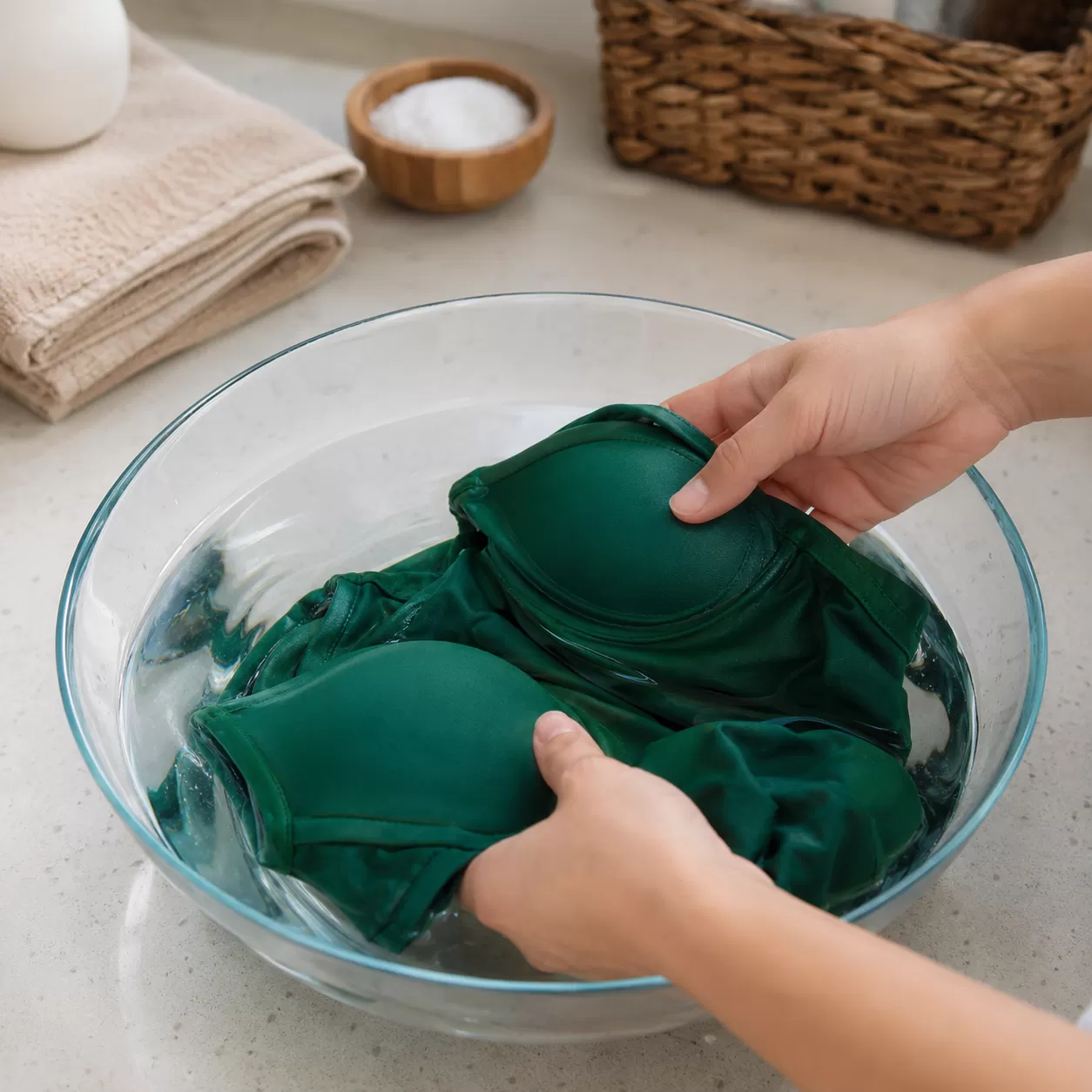
If you are dealing with a stretched out bathing suit and want to avoid the risk of heat damage altogether, you don’t have to rely on a dryer or boiling water. There are several highly effective, heat-free ways to how to fix a swimsuit that’s too big without compromising the integrity of the fabric.
Minor Tailoring & Sewing Darts
When a swimsuit fits perfectly everywhere except for one or two loose areas, a quick session with a needle and thread is your best option. Taking your suit in manually ensures a custom fit without affecting the synthetic fibers elasticity.
- Sewing Darts: Pinch the excess fabric at the waistline or underarms, turn the suit inside out, and sew a straight diagonal line along the pinch. This is one of the easiest clothing alterations for swimwear that creates an instant, secure cinch.
- Adjusting Bikini Straps: If the top is sagging, simply cut the straps where they meet the back band, shorten them to your desired length, and sew them back down using a tight zigzag stitch for maximum stretch.
Creative Styling Hacks
You can easily learn how to make a swimsuit tighter using a few clever styling tricks that require absolutely zero sewing or alteration skills.
- The Criss-Cross Method: For tie-back bikinis or halter tops, cross the straps over your chest or behind your back before tying them. This instantly pulls the cups closer together for a firmer hold.
- Knotting: If your one-piece or tankini is too long in the torso or loose at the hips, gather a small section of fabric at the side hip and tie it into a chic, tight knot to instantly pull the fabric taut.
Using Bikini Inserts
Sometimes the issue isn’t the overall size, but a lack of volume to fill out the cups. Using bikini inserts is a foolproof way to fix a gaping swimsuit top.
- Silicone Inserts: These waterproof inserts slide easily into the existing cup pockets. They add instant volume, fill out loose fabric, and won’t absorb water or weigh you down.
- Sewn-In Foam Pads: For swimsuits without built-in pockets, you can pin standard foam swimsuit pads inside the lining and tack them down with a few quick stitches to permanently improve swimwear shape retention.
Tired of a Stretched-Out Bathing Suit? The Berlook Difference
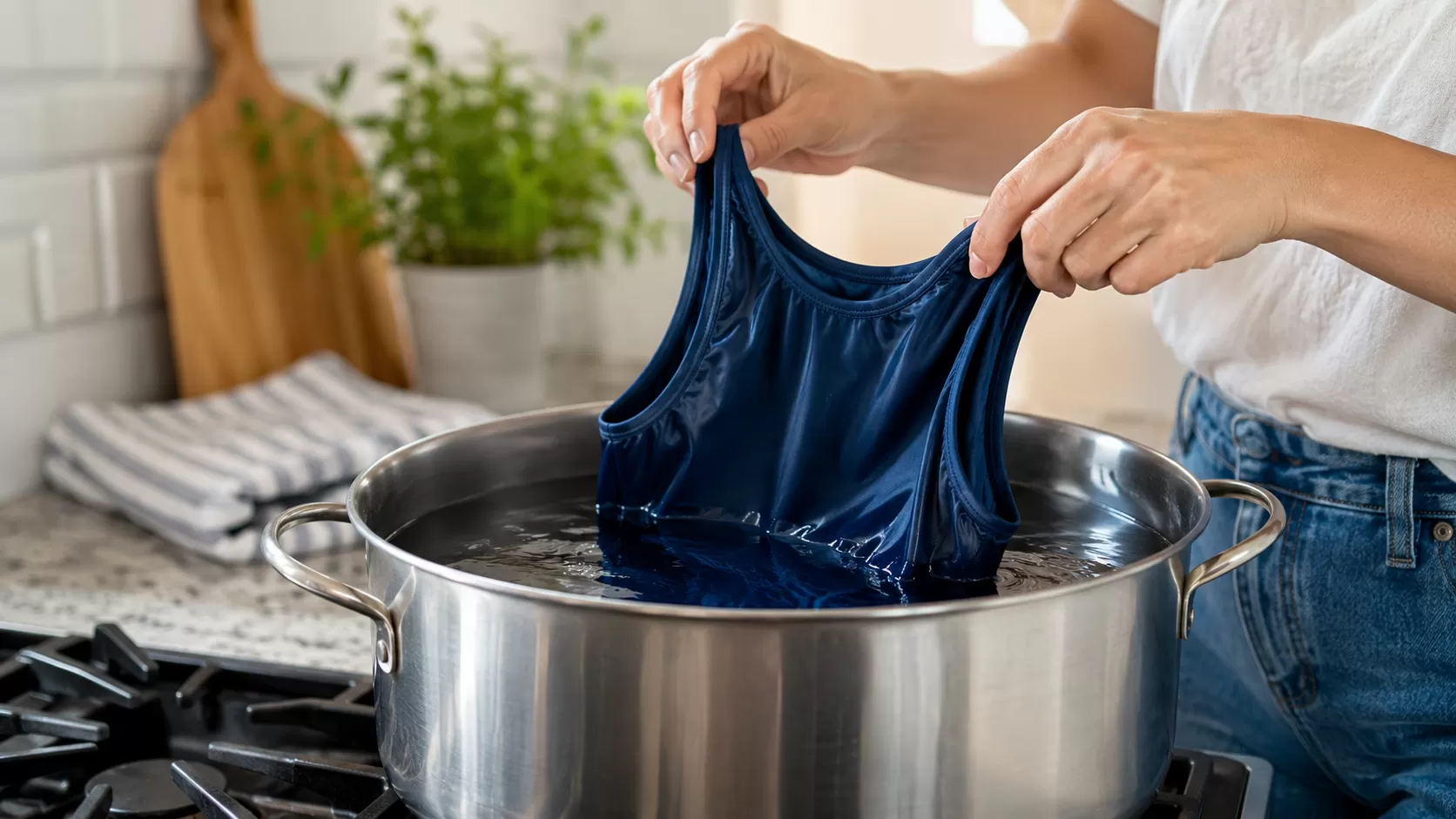
Trying to shrink a swimsuitis a temporary fix for a permanent problem. Once synthetic fibers lose their elasticity, getting that perfect, snug fit back is an uphill battle. Berlook swimwears are designed to skip the stretching drama entirely.
Berlook Standard
According to AATCC testing, premium chlorine-resistant polyester retains over 95% of tensile strength after 200+ hours of chlorine exposure, compared to approximately 70–80% for standard blends.
|
Feature |
Standard Swimwear |
Berlook Standard |
|
Fabric Core |
Standard synthetic blends |
Premium chlorine-resistant fabric |
|
Shape Retention |
Stretches out after 15–25 wears |
Engineered for 50+ wears with minimal loss |
|
Heat Resistance |
Degrades above 70 °C (158 °F) |
Maintains integrity up to 85 °C (185 °F) |
|
Chlorine Resistance |
70–80% tensile strength after 200 hrs |
95%+ tensile strength after 200 hrs |
Frequently Asked Questions
How many times can I safely shrink a swimsuit?
For nylon/spandex blends, limit shrinking attempts to 2–3 cycles. Each heating cycle stresses the elastane fibers, and repeated treatments cause cumulative, irreversible damage. For polyester, you may attempt 3–4 cycles with minimal degradation due to its higher thermal stability. Cotton blends are the most forgiving and can tolerate 4–5 cycles, though watch for over-shrinkage.
Will chlorine damage the swimsuit during the shrinking process?
Chlorine will absolutely cause chlorine and fabric damage if it is left in the material during the heating process. High heat bonds chemicals to synthetic fibers, which accelerates color fading and breaks down the spandex. Always wash your suit thoroughly with fresh water to remove all chemical residue before attempting any heat-shrinking methods.
What temperature water should I use to shrink my swimsuit?
Use a kitchen thermometer for accuracy. For nylon/spandex: 70–80 °C (158–176 °F). For polyester: 85–95 °C (185–203 °F). For cotton blends: up to 95 °C (203 °F). Never use actively boiling water (100 °C / 212 °F) directly on spandex-containing swimwear.
