
Safe Swimwear Colours for Visibility in 2026
Most people choose a swimsuit based on style, trends, or skin tone. But do you know safe swimwear colour is also important?
The truth is, underwater visibility drops dramatically just inches below the surface, and those trendy, muted tones can all but vanish. According to the CDC, drowning is the leading cause of death for children ages 1–4 in the United States.
That is why we are diving into the data—including the widely cited Alive Solutions swimsuit colour tests—to break down how high-visibility bathing suits pierce through water surface agitation and help prevent tragedies.
Let’s dive right in.
Swimwear Colours Change Underwater
When you look at a swimsuit on a hanger, you see its true shade. But the moment that fabric submerges, everything changes. Water acts as a powerful natural filter, absorbing light waves and altering how human eyes perceive color.
If you want to keep your family secure around the water, understanding safe swimwear colours starts with the physics of light absorption.
Light Absorption Patterns
Water absorbs different wavelengths of light at varying rates. Red is the longest wavelength on the visible spectrum and the very first to disappear underwater, often turning into a dull gray or black just a few feet below the surface. In clear water, most red light is filtered out within roughly 15 feet of depth — and murky or churned water compresses that distance dramatically. As depth increases, orange, yellow, and green fade away next.
- 0–5 Feet: Reds begin to dull rapidly.
- 5–10 Feet: Oranges and yellows lose their vibrancy.
- 10+ Feet: Most standard colors morph into dark shadows or blend entirely into the background.
Fluorescent vs. Standard Dyes
To combat this disappearing act, the type of fabric dye matters immensely. Standard pigments rely on reflected ambient light, making them highly susceptible to fading underwater. Fluorescent dyes, however, work differently. They absorb invisible ultraviolet light and re-emit it as lower-energy visible light. This is why neon swimwear appears to glow; it actively creates its own visibility, giving high-visibility bathing suits a real edge for quick identification during an emergency. It is also why, when we develop a new neon colourway, we judge swatches wet as well as dry: saturation shifts how a fluorescent pigment reads, and a shade only earns a place in our line if it still pops once soaked.
The Illusion of Surface Agitation
An open, calm pool is easy to see through, but real-world swimming conditions are rarely still — and a swimmer in trouble can slip under in as little as 20 to 60 seconds. Wind, splashing, and swimming create surface agitation, which acts like a frosted glass lens.
- Turbulence: Waves and bubbles reflect light away from the eye, masking anything beneath them.
- The Camouflage Effect: Dark or muted tones instantly blend into the shadows created by ripples.
- The Neon Advantage: Highly vibrant, fluorescent shades are the most likely to punch through the distortion of churning water and remain visible to parents and lifeguards.
The Safe Swimwear Colour Spectrum
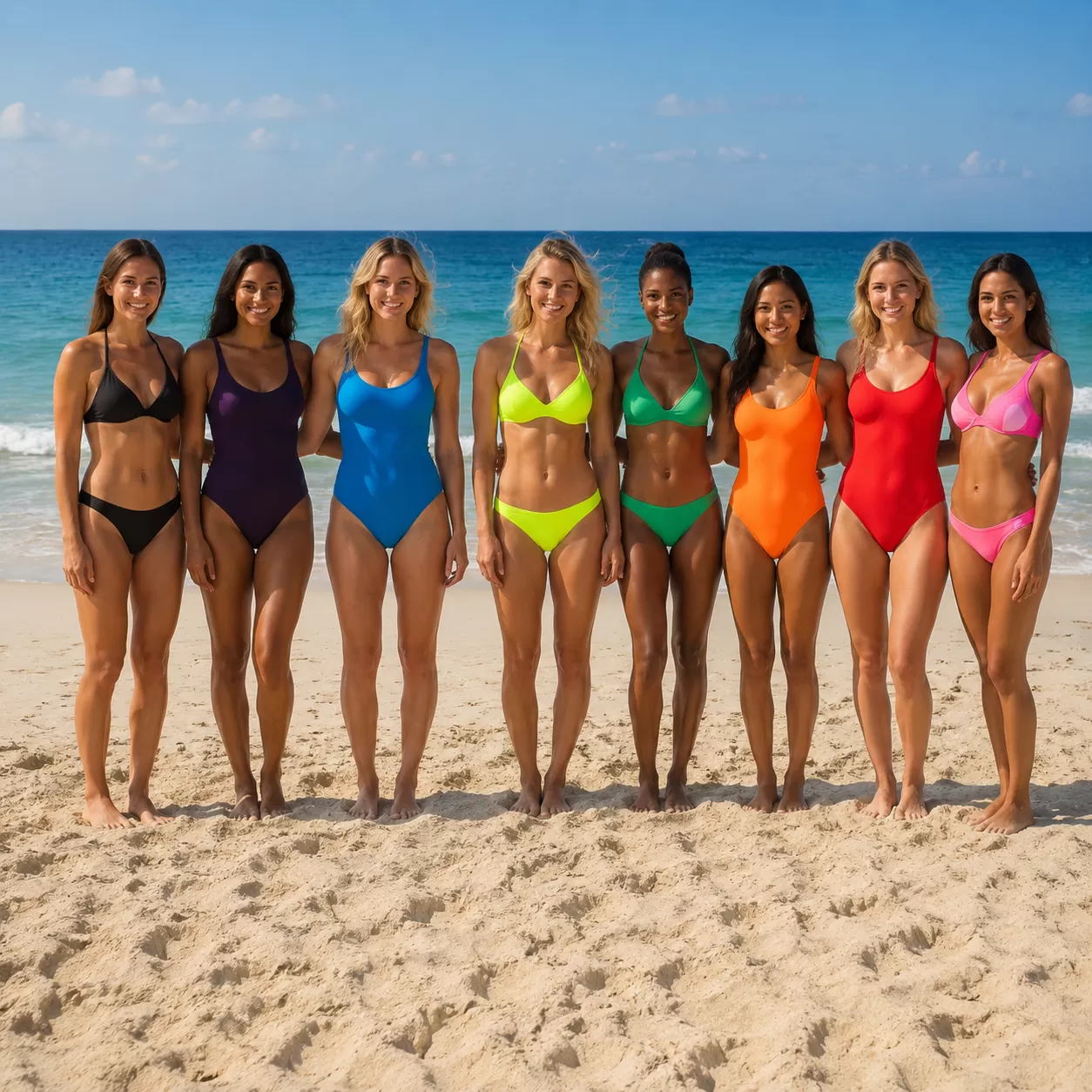
When we look at safe swimwear colours, the data shows a massive divide between shades that stay visible and shades that blend into the background. Choosing the right hue isn’t just about fashion; it is a critical choice for underwater visibility and drowning prevention.
Drawing on published field tests and our own hands-on experience with swim fabrics and fluorescent dyes, we have categorized how different shades typically perform when submerged.
How We Vetted These Rankings
Our starting point is the 2021 field testing by ALIVE Solutions Inc., an aquatic safety consultancy that photographed 14 identical fabric swatches in real-world conditions: a light-bottom pool (calm, then with surface agitation), a dark pool bottom, and 18 inches of murky lake water on a partly sunny day — shot from the surface, from shore level, and from a slightly elevated boat-dock angle. The full ranked photo sets are public on their site, so you can verify every placement yourself.
We then cross-checked those rankings against the physics of light absorption, current CDC drowning-prevention guidance, our own daily work with fluorescent dyes and swim fabrics, and the matching recommendations now published by children’s hospitals and swim programs such as Akron Children’s. Two nuances worth knowing: on dark pool bottoms, the neon trio of orange, green, and yellow led while reds and pinks darkened; and in the lake test, white technically placed fourth — but it read as surface glare or clouds, which is why it stays off our recommended list.
The Clear Winners (High-Visibility Outperformers)
For maximum visibility in the water, neon swimwear was the clear standout in testing. These shades tend to remain visible even through water surface agitation and at greater depths.
- Neon Orange: The most consistent top performer across every environment we compared, from backyard pools to open water.
- Neon Pink: Highly visible in traditional blue-bottomed pools, offering an excellent contrast.
- Neon Lime Green & Bright Yellow: Excellent choices for high-visibility bathing suits that stand out instantly to lifeguards and parents.
The Dangerous Losers (Low-Visibility Camouflage)
Many popular fashion colors can effectively disappear underwater, making it dramatically harder to spot a swimmer in distress. Muted tones vs. neon testing shows that dark and natural tones act as camouflage.
| Risk Level | Colors to Avoid | Why They Are Dangerous |
|---|---|---|
| Extreme Risk | White, Light Blue | They blend into pool liners, clouds, and water reflections, making a swimmer extremely hard to spot. |
| High Risk | Dark Blue, Black, Grey | These shades can look just like shadows, leaves, or debris at the bottom of a pool or lake. |
| High Risk | Dark Green, Brown | They match underwater algae, silt, and weeds, and can all but erase a swimmer from view. |
Note: People often ask, is purple a safe swim color? The answer is generally no. While it looks bright on the rack, dark purple quickly mimics deep shadows underwater, while light lavender fades into the reflection of the water surface. Stick to neon shades for the best visibility for kids and adults alike.
Choose Safe Swimwear Colours for Your Destination
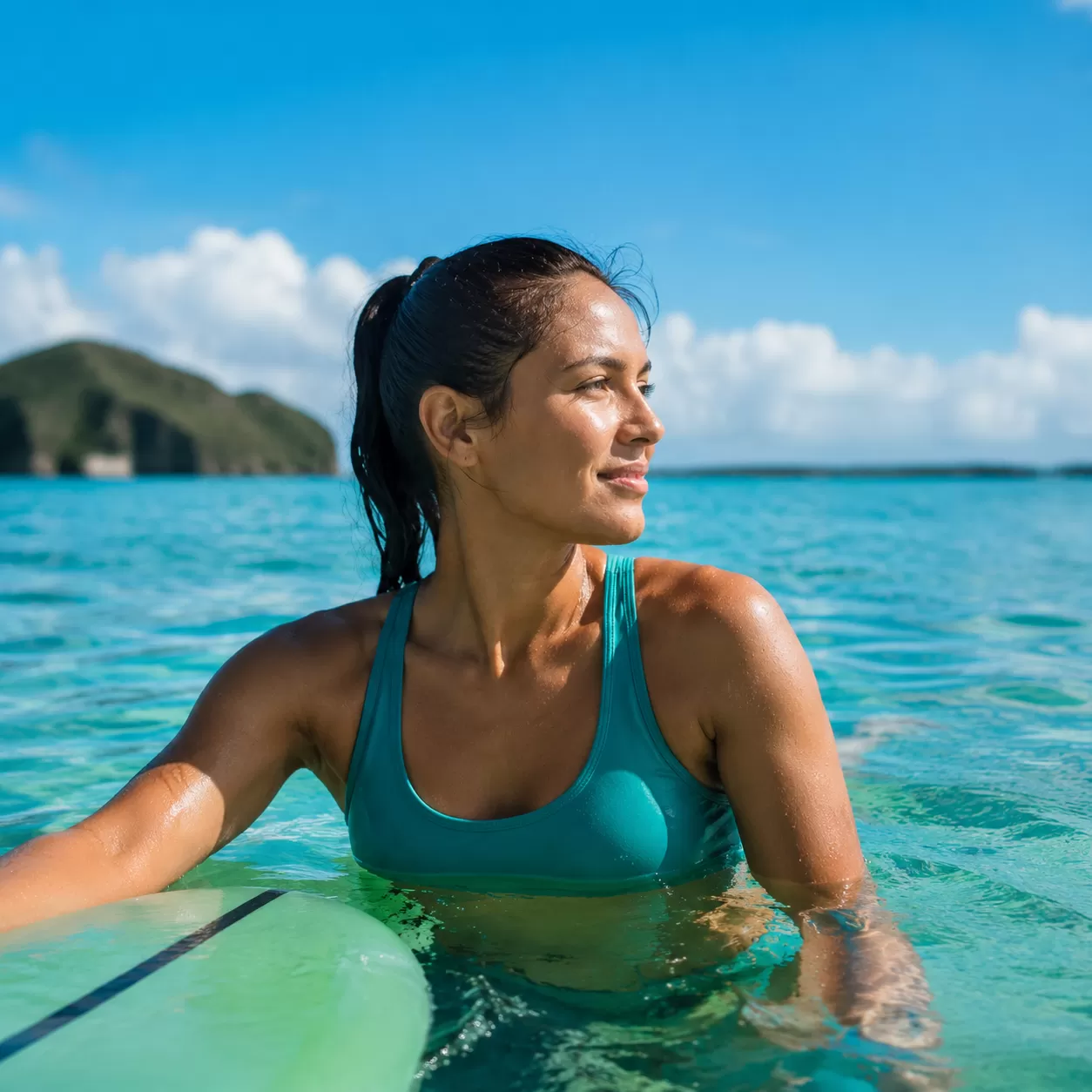
Where you swim matters just as much as what you wear. A shade that pops in a backyard pool can completely disappear in a lake or the ocean. To ensure maximum underwater visibility, we need to match our safe swimwear colours to the specific environment.
1. Backyard & Public Pools (Controlled, Light Bottoms)
Standard swimming pools with light blue or white bottoms offer the best contrast, but water surface agitation from splashing can still create blind spots.
- Top Picks: Neon pink and neon orange offer the highest visibility against light blue backgrounds. If your pool has a dark bottom, shift toward neon orange, green, or yellow instead — neon pink loses much of its edge against dark surfaces.
- What to Avoid: Blue and white tend to vanish. Muted tones vs. neon tests show that pastel shades blend into the reflected light on the pool floor, making drowning prevention much harder.
2. Lakes, Ponds, & Rivers (Murky Water, Silt, Algae)
Open water safety requires an entirely different strategy due to dark, green, or brownish water clouded by suspended silt, sediment, and algae.
- Top Picks: Neon orange, neon green, and neon yellow are the clear winners in murky open water. They cut through dim, low-clarity depths and stay visible from the shore.
- What to Avoid: Do not wear blue, black, or grey. Even bright pink can look like a shadow once it drops a few feet below the surface in dark water.
3. Ocean & Beach Swimming (Surf, Waves, White Foam)
Beach and lake safety rules change when you add breaking waves and white foam into the mix. The churning water reflects light, creating a massive camouflage effect.
- Top Picks: Neon pink and neon yellow perform best against the deep blue ocean and white surf.
- What to Avoid: White swimwear can disappear almost instantly in the foam. Dark blues and greens blend directly into the ocean water, making a swimmer who gets pulled under by a current far harder for rescuers to locate.
| Environment | Best Safe Swimwear Colours | Colours to Avoid |
|---|---|---|
| Chlorinated Pools | Neon Pink, Neon Orange | White, Light Blue, Pastels |
| Lakes & Rivers | Neon Orange, Neon Green, Neon Yellow | Black, Grey, Dark Blue, Pink |
| Ocean & Beaches | Neon Pink, Neon Yellow, Neon Orange | White, Blue, Dark Green |
Smart Styling: Balancing Aesthetics with Safety
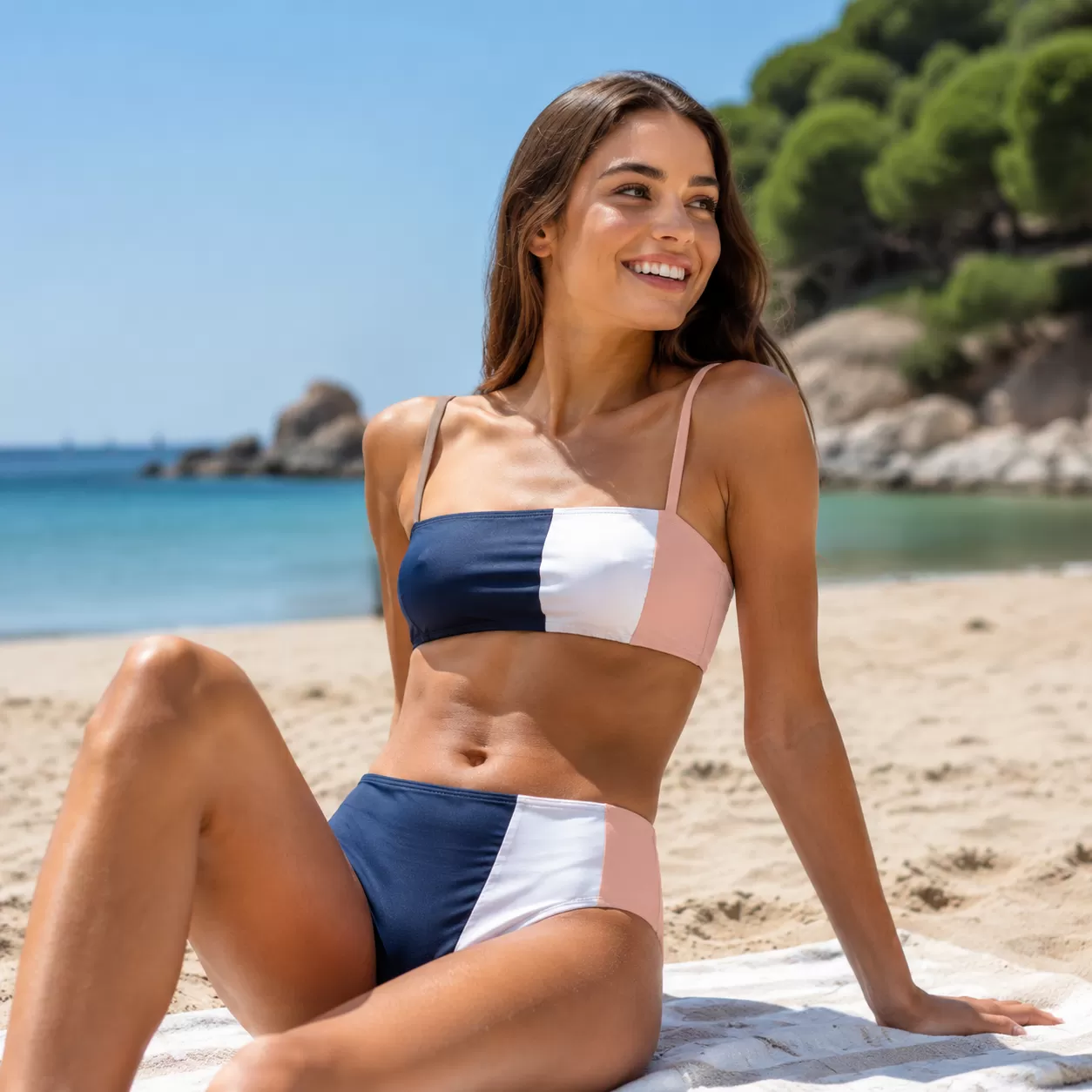
We believe you shouldn’t have to sacrifice your personal style to stay safe. Choosing safe swimwear colours doesn’t mean wearing a boring, utilitarian uniform. It’s entirely possible to look great while prioritizing underwater visibility and drowning prevention.
The Color-Blocking Strategy
One of the best ways to stay stylish and visible is through strategic color-blocking. By pairing a high-contrast neon top with darker bottoms, you get the best of both worlds.
- Top-Half Focus: Keep the brightest, neon swimwear colors closest to the surface (shoulders and chest) where they are easiest to spot through water surface agitation.
- High Contrast: Mix a fluorescent swimsuit piece with a solid neutral to create a sharp visual contrast that pops in both chlorinated pools and murky open water.
The Myth of Busy Patterns
Many swimmers assume that loud, busy prints make them stand out. In reality, complex patterns can have a camouflage effect underwater.
- Visual Distortion: Small, intricate prints tend to bleed together underwater, making a swimmer blend into the background.
- The Solid Advantage: Solid, high-visibility bathing suits create a clear, distinctive silhouette that the human eye can track far more easily in an emergency.
- Bold Graphics over Fine Prints: If you love patterns, choose large-scale, high-contrast geometric shapes rather than tiny floral or abstract prints.
Run Your Own 10-Minute Visibility Check
The best way to trust this advice is to reproduce it with the suits you already own — it is the same quick check we run on new colourways before they make our line. Here is the repeatable version:
- Set the scene: pick a sunny day and the water your family actually swims in — your pool, the lake shallows, or the surf line.
- Submerge each suit about 18 inches (45 cm) deep, one at a time, in the same spot.
- Photograph from a lifeguard’s eye line: stand 10–15 feet back at full height and shoot each suit twice — once in calm water, once while a helper churns the surface.
- Compare side by side: the suits you can identify in under a second are your swim-day picks; anything you have to hunt for gets demoted to lounging-only.
Two rules while you test: keep children out of the water during the check, and judge the agitated photos hardest — that is what a real emergency looks like.
Final Thoughts - Berlook’s Sustainable Brights
| Fabric Feature | Safety & Sustainability Benefit |
|---|---|
| Recycled Nylon | Reduces waste while maintaining an ultra-smooth, premium fit. |
| Fade-Resistant Dyes | Helps your safe swimwear colours stay neon and highly visible season after season. |
| UPF 50+ Protection | Combines aquatic visibility with maximum sun defense for long beach days. |
Our experience shows that bright swimwear can be both safety-smart and eco-conscious. We design our pieces using recycled, high-quality fabrics that hold their color density even after hours in the sun and chlorine.
Choosing the right look is all about making smart, intentional choices that keep you or your family highly visible without compromising on a modern, coastal aesthetic.
One last reminder: a bright suit is a powerful layer of protection — but it never replaces active, undistracted supervision around water.
Sources & Further Reading
- ALIVE Solutions Inc. — swimsuit colour visibility testing (pool & open water)
- CDC — Drowning Prevention: facts and data
- American Academy of Pediatrics (HealthyChildren.org) — layers of protection against drowning
- National Drowning Prevention Alliance — drowning facts
Safety disclaimer: Swimwear colour improves the odds that a swimmer is seen — it does not prevent drowning on its own, and no colour can guarantee visibility in every condition. Always pair a bright suit with the layers of protection recommended by the American Academy of Pediatrics: close, undistracted adult supervision, four-sided pool fencing, swim lessons, U.S. Coast Guard–approved life jackets, and CPR training.
This article is general safety information, not professional advice.



