
Prevent Swimwear Camel Toe: A Complete How-to Guide
Recall that you slip into a new bathing suit, look in the mirror, and notice that awkward, prominent front wedgie. Swimwear cameltoe is incredibly common, but it is completely preventable. It is not a body flaw; it is a direct result of poor garment construction and incorrect sizing.
This guide explains the four causes behind a bathing suit camel toe, and gives you a store-side checklist plus six fixes you can use today.
Click to run a 30-second in-store check before purchase
|
1. Hold it to the light. If you can see clearly through the unstretched fabric, it is too sheer on its own and needs a lining. 2. Stretch and release a section. It should snap straight back. Slow recovery means it will bag out and crease when wet. 3. Check the front seam. Run a finger down the crotch; a hard raised seam is a warning sign. Prefer flat, bonded, or seamless fronts. 4. Find the lining. A wide, smooth gusset is what keeps the front flat. A narrow, flimsy one will not. 5. For one-pieces, check torso length. If the straps already feel tight when the crotch sits comfortably, the torso is too short for you. |
Why Does Camel Toe Happen?
We use this framework and detailed explanations throughout the guide so that you can match a symptom to its cause and its fix.
|
Root cause |
What is physically happening |
The fix in one line |
|
Thin or low-recovery fabric |
Lightweight knit collapses and clings when wet instead of smoothing across the body. |
Choose a heavier, double-lined knit (see specs below). |
|
Vertical tension (wrong torso length) |
A too-short one-piece pulls upward through the crotch. |
Match torso length, not just waist size. |
|
A prominent centre seam |
A stitched front seam guides fabric inward along its line. |
Pick seamless or bonded-edge bottoms. |
|
Excess fabric bunching |
Too much loose material pools at the lowest point and folds in. |
Fit the waist correctly; avoid sizing up blindly. |
Figure 1. The four mechanical causes of a front crease, with the corresponding fix.
Thin & Cheap Fabrics
Fabric weight and recovery do most of the work in a smooth fit. Weight is measured in GSM (grams per square metre), and recovery is the fabric's ability to snap back to its original shape after being stretched. Low-grade single-layer knits score poorly on both: they stretch out when wet and cling to every contour.
- Why weight matters: Fashion swimwear typically sits around 180–200 GSM and relies on a lining for opacity, while denser performance fabric runs roughly 250–320 GSM for shape retention when wet. Thin fabric below about 150 GSM tends to go sheer and unsupportive once submerged.
- Why recovery matters: Recovery comes mainly from the elastane (spandex) content. Most quality swim fabric is a four-way-stretch blend of 80–90% nylon or polyester with 15–20% spandex; that ratio is what lets a suit move with you and then return to shape instead of bagging out.
A flimsy swimwear crotch lining and a low-recovery shell are the single most common cause of a front crease, because the fabric simply collapses inward instead of bridging the area.
What good fabric specs look like
|
Property |
Avoid |
Look for |
Why |
|
Fabric weight (GSM) |
Under ~150 GSM, unlined |
~180–200 GSM lined, or 250–300 GSM performance |
Heavier, denser knit stays opaque and holds shape when wet. |
|
Spandex / elastane |
Under ~10% |
~15–20% |
Higher elastane gives four-way stretch with strong recovery. |
|
Construction |
Single layer |
Double-lined / front gusset |
A second layer adds structure and a flat barrier. |
|
Stretch recovery |
Bags out after a few wears |
Snaps back fully |
Tested under ASTM D2594; good knits recover ~85%+ after load. |
Figure 2. Target fabric specifications. GSM and elastane ranges reflect commonly cited industry figures for nylon- and polyester-spandex swim fabrics; recovery is assessed using the ASTM D2594 stretch-and-growth method for knitted fabrics.
Incorrect Sizing and Torso Pull
Buying the wrong size is one of the biggest swimwear sizing mistakes you can make, especially with one-piece options.
- Vertical Tension: If a one-piece swimsuit is too short for your torso, the straps pull the entire suit upward. This creates a severe vertical pull directly through the crotch.
- Too Snug Bottoms: Choosing bikini bottoms that are a size too small forces the fabric to dig in tightly, creating an instant bikini wardrobe malfunction.
Poor Design and Flawed Seams
The way a swimsuit is stitched plays a massive role in how it sits against your skin.
- The Dreaded Center Seam: Traditional bikini bottoms feature a prominent seam running right down the middle of the crotch. This line naturally guides fabric inward.
- Weak Swimwear Crotch Lining: A flimsy, narrow lining fails to provide a flat barrier, allowing the outer fabric to ride up freely.
Excessive Material Bunching
Sometimes, the issue is actually having too much fabric in the wrong places.
- Horizontal Folding: When a suit is too long or loose in the waist, the extra material has nowhere to go. It pools and gathers at the lowest point.
- Wet Fabric Sag: Preventing fabric bunching becomes even harder once you hit the water, as loose, wet fabric naturally sags and folds into body creases.
6 Expert Tips to Prevent and Fix Swimsuit Camel Toe
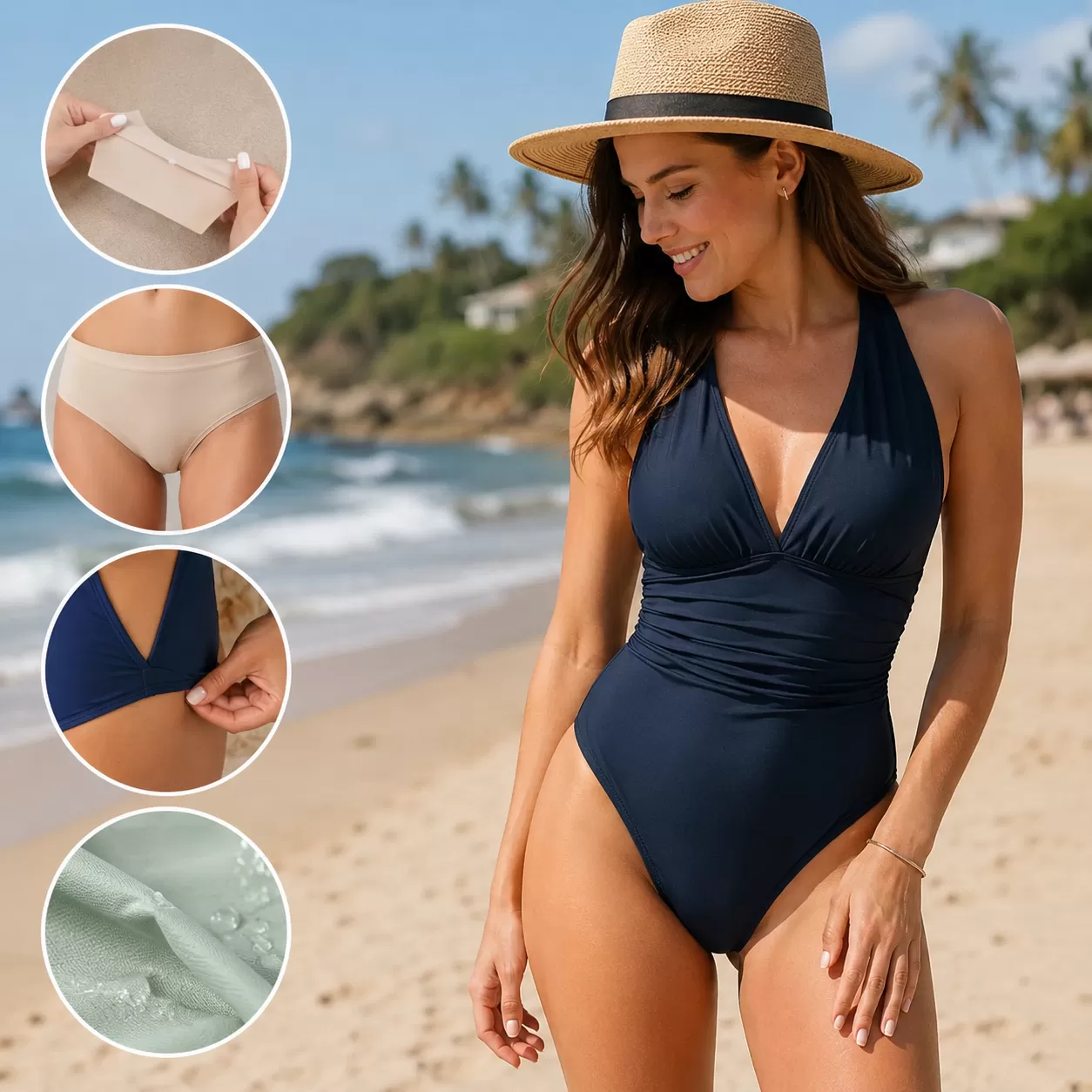
Dealing with an uncomfortable fit at the beach or pool can instantly ruin your day. Here are six practical, expert-approved strategies to ensure your swimwear fits flawlessly every single time.
1. No use of the centre seam
The simplest structural fix is to avoid the vertical front seam entirely. Seamless bikini bottoms distribute fabric evenly across the front without a line cutting into the skin.
- Look for bonded or welded edges instead of traditional stitched seams to keep the front flat and smooth.
2. Prioritise double layers and a wide gusset
Thin fabric is the enemy of a clean fit, so check the interior construction before you buy.
- Double-lined panels add structure and thickness that stop the fabric from shifting.
- A wide front lining or built-in gusset acts as a flat shield that stays smooth even when the fabric is wet.
- A premium nylon- or polyester-spandex blend in the ranges above retains its shape over repeated wear.
3. Get the fit right (torso and waist)
Many sizing problems happen because we focus on waist or hip measurements and ignore length.
- One-piece tip: If the torso is too short, the straps drag the whole suit up. Check that you can run a hand under the crotch panel without the straps biting into your shoulders.
- Between sizes? For length, size up; for the waist, fit it correctly rather than oversizing, because excess fabric causes its own bunching.
4. Use pattern, colour, and texture
For extra peace of mind, let visual cues help. Solid, light, shiny fabric reflects light in a way that highlights every fold.
- Darker shades such as black, navy, and deep olive naturally hide shadows and fit lines.
- Bold prints such as florals, abstracts, and geometrics break up the eye's read of any contour.
- Ribbed or textured fabric adds physical depth that makes minor fit issues far less visible.
5.Do Clever Styling
Choosing flattering swimsuit styles designed to camouflage or redirect fabric tension makes a massive difference.
| Style Feature | How It Helps Prevent Camel Toe |
|---|---|
| Ruched bikini bottoms | Gathered fabric adds volume and prevents tight pulling across the front. |
| Swim shorts and cover-ups | Provides complete, worry-free coverage for active beach days. |
| High-waisted bottoms | Shifts the fabric tension to the waist rather than pulling from the crotch. |
Quick DIY Hacks for an Emergency
Sadly, if you are already at the beach and notice a fit issue, use these quick, comfortable beachwear solutions to fix it on the spot:
- The Pantyliner Hack: Trim a thin pantyliner and stick it horizontally into the crotch lining of your dry suit to create an instant, firm barrier.
- Waterproof Inserts: Slide a removable bikini top pad into the bottom gusset for a quick, reusable shield that handles water perfectly.
- Adjust the Straps: If you are wearing a one-piece or a halter bikini bottom, loosen the vertical straps slightly to instantly relieve the upward pull.
The Ultimate Solution: How Berlook Approaches the Problem

We designed Berlook to take the constant annoyances and self-consciousness out of a beach day. The construction choices below follow directly from the four root causes above.
Built for comfort
Our suits use a heavier, premium nylon-spandex knit chosen for a balance of stretch and support.
- Premium weight: We avoid the thin, cheap fabric that causes pulling, working in the denser end of the range described in Figure 2.
- Shape retention: The fabric holds its structure even when fully wet.
- Second-skin feel: Comfortable for all-day wear without digging in.
Thoughtful construction
We address the root causes directly by rethinking how each piece is cut and lined.
|
Feature |
Which root cause it solves |
|
Seamless / bonded front |
Removes the centre seam that guides fabric inward. |
|
Double-lined panels |
Adds structural thickness to prevent bunching and sheerness. |
|
Wide front lining |
Gives full coverage and stays flat against the body. |
|
Ruched bottoms |
Masks the area while adding a stylish lift. |
|
Torso-mapped one-pieces |
Balances torso length and waist rise to remove vertical pull. |
Sustainable materials
Comfortable swimwear should not come at the planet's expense. Berlook blends durable, heavier-weight construction with recycled nylon and ocean-bound plastics, so you get the shape retention that prevents fabric shifting along with a lower-impact material choice.
FAQs About Preventing Cameltoe in Swimsuits
Why does my bathing suit camel toe only happen when it gets wet?
Water heavy-loads the fabric. When cheap or thin materials absorb water, they lose their elasticity, sag, and cling tightly to your body. This suction effect pulls the fabric right into delicate areas, causing a bathing suit camel toe that wasn’t visible when dry.
Can a larger size prevent fabric bunching and cameltoe?
Going up a size rarely fixes the issue and often makes it worse. Sizing up creates excess material, leading to preventing fabric bunching problems. Loose, wet fabric shifts around easily and pools in the crotch area. Focus on finding a proper one-piece swimsuit fit guide or exact bottom measurements rather than just buying a bigger size.
Do seamless swimwear bottoms completely eliminate the problem?
High-quality seamless swimwear bottoms drastically reduce the risk, but they are not a 100% guarantee on their own. For complete protection, look for a combination of design elements:
- No-seam bikini bottoms to eliminate front cutting.
- A thick, high-quality swimwear crotch lining.
- Double-lined swimsuits that maintain structure under tension.
What is the quickest emergency fix for a bikini wardrobe malfunction?
If you are caught off guard at the beach, you can fix a bikini wardrobe malfunction fast with these comfortable beachwear solutions:
- The Pantyliner Hack: Dry the inside of the suit and stick a thin pantyliner vertically across the crotch guard to create an instant firm barrier.
- Waterproof Tape: Apply a small strip of apparel tape directly to the inside fabric to flatten the area.
- Quick Camouflage: Tie on swim shorts and cover-ups, or opt for ruched bikini bottoms that naturally hide lines.
Last reviewed: May 2026.Written by the Berlook design and product team, drawing on our in-house swimwear pattern-making and fabric-sourcing experience.
