
manuals
How to Stretch Out Bikini Bottoms Safely & Smoothly at Home
New bikini bottoms digging into your hips, pinching, or giving you that frustrating muffin-top? You’re not alone — and the good news is you don’t have to suffer through an uncomfortable beach day or deal with a return. Knowing how to stretch out bikini bottoms takes about fifteen minutes and a few things you already have at home.
Below are five gentle, non-destructive methods I use to safely loosen swimwear elastic and relax stiff fabric — plus the exact temperatures to stay under so you don’t accidentally wreck a suit.
Let’s get you to that flawless, second-skin fit.
What Makes Bikini Bottoms Tight?
Before you start tugging, it helps to know how swim fabric actually behaves — that’s what keeps you from overdoing it. Yes, swimsuits relax a little when wet, but a too-tight pair usually needs some extra help to comfortably ease off. Here’s what you’re working with.
The Material It’s Made Of
Most quality swimwear is a synthetic blend built to hold its shape and color. The most common is a nylon spandex blend, though polyester-spandex is just as popular.
- Nylon or polyester: gives the suit its smooth, lightweight, quick-drying body.
- Spandex (also called Lycra or elastane): the stretchy fiber that creates the body-hugging fit.
One detail worth knowing: a nylon spandex blend feels softer and stretchier but is more heat-sensitive, while polyester-spandex is sturdier and more chlorine-resistant but a touch less stretchy.
That’s why a polyester suit often needs a little more patience to relax. Either way, high-density weaves or double-lined fabrics can feel restrictive when the size is even slightly off.
The Level of the Elasticity
The real culprit behind that pinching feeling usually isn’t the fabric — it’s the elastic running through the waistband and leg openings.
- It’s sewn in under tension so the suit stays put in the water.
- When you get in the pool, the fabric relaxes but the elastic keeps its grip so the bottoms don’t slip down.
A quick way to tell which you’re dealing with: pinch the waistband. If the fabric has give but the band still bites, it’s an elastic problem. If the whole thing feels snug, it’s the fabric. Most of the methods below handle fabric tightness; the last one tackles stubborn elastic.
The Dangerous Temperature
If there’s one rule to remember, it’s this: heat is spandex’s worst enemy. Elastane fibers start to lose their snap and recovery with sustained heat above roughly 150°F (65°C) — and a household dryer runs hotter than that, around 135–170°F (57–77°C). That’s exactly why you never put swimwear in the dryer.
For every method below, keep your water lukewarm — comfortable to the touch, around body temperature (about 85–100°F / 30–40°C), never hot. Gentle, low, controlled heat relaxes the fibers; high heat melts them, and there’s no coming back.
5 Safe Ways to Stretch Out Tight Bikini Bottoms
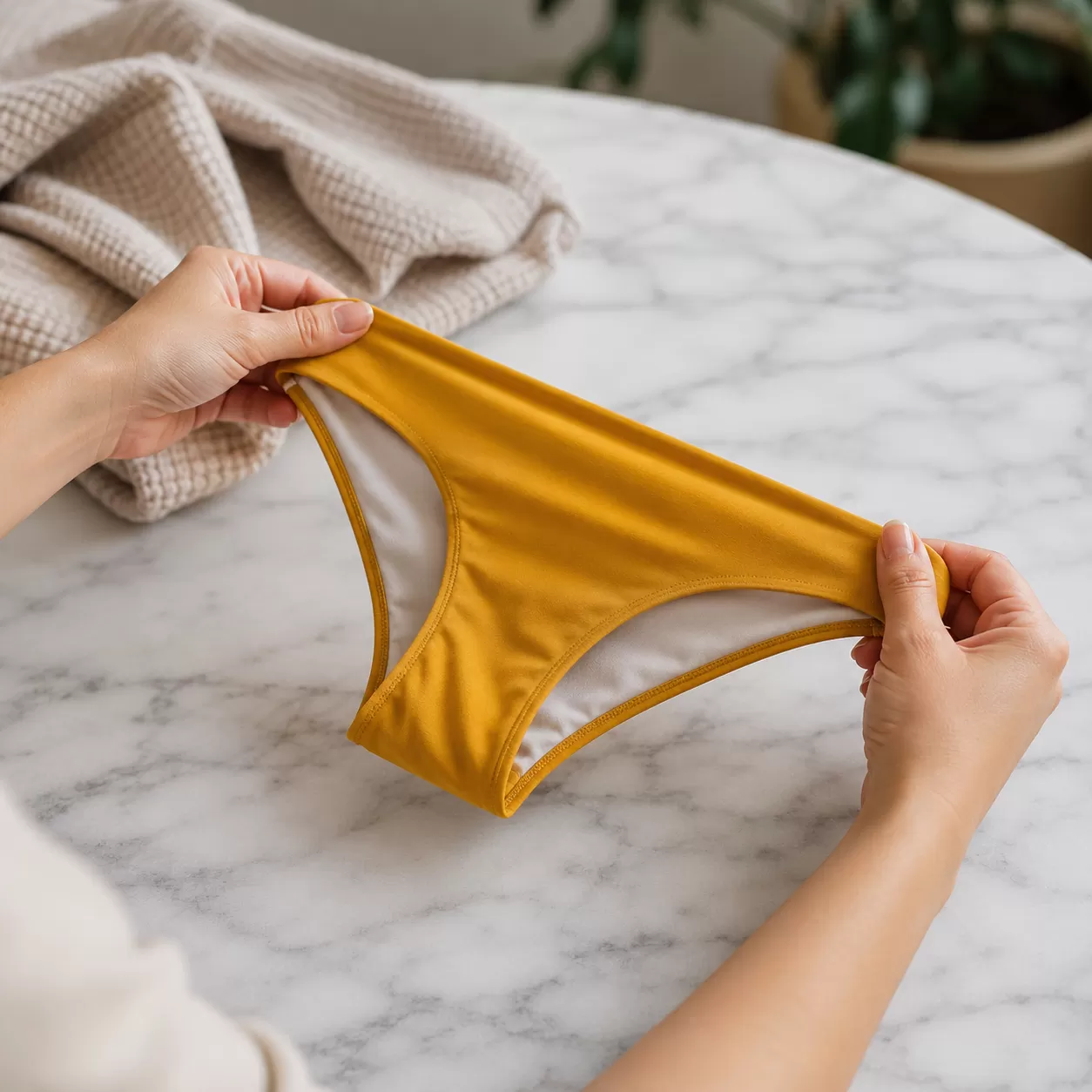
If your bottoms are digging into your hips or causing a muffin-top, don’t toss them. Here are five reliable ways to relax the fabric and ease the fit — no damage required.
One honest expectation first: these methods buy you roughly half an inch to an inch (about 1–2.5 cm) of extra give. That’s usually enough to stop the pinching, but it won’t turn a size S into a size M. If a suit is genuinely a full size too small, a stretch won’t save it.
Method 1: The Warm Water Soak & Natural Body Mold
The easiest way to make a swimsuit bigger is to let your own body do the shaping.
- Soak: Submerge the bikini bottoms in lukewarm water (around body temperature) for 15 minutes.
- Wear: Put them on while still damp.
- Mold: Walk around, do a few squats, and let the fabric contour to your shape as it air-dries.
This is the gentlest option, and the one I reach for first.
Method 2: The Gentle Manual Stretch Technique
This hands-on method targets specific problem spots — say, a leg opening that cuts in.
- Dampen the tight area with warm water.
- Anchor one side of the waistband under your foot or against a smooth, heavy object.
- Firmly but gently pull the fabric in the direction you need more room.
- Hold the stretch for 30 seconds, release, and repeat a few times.
Stretch a little and recheck rather than yanking hard once — slow and steady is what protects the elastic.
Method 3: The Spray-and-Stretch Fiber Relaxer
For stubborn or thicker fabric, a little hair conditioner helps the fibers relax and glide.
- Mix: Combine 1 tablespoon of hair conditioner with warm water in a spray bottle.
- Spray: Mist the tight bands generously.
- Stretch: Pull the fabric by hand or stretch it over a smooth object (a small box or a sofa cushion) and let it air-dry.
- Rinse: Rinse the suit in cool water afterward. You don’t want conditioner residue building up — leave-on coatings can degrade elastane over time, which is the same reason you skip fabric softener on swimwear.
Method 4: The Low-Heat Hair Dryer Precision Method
A little heat makes a nylon spandex blend more pliable — the key word is little. Keep the dryer on its lowest or cool setting and well back, so the surface stays nowhere near that 150°F danger zone.
| Step | What to do | Keep in mind |
|---|---|---|
| 1. Prep | Lay the bottoms over a hanger or a solid form. | Don’t over-stretch. |
| 2. Heat | Warm the tight elastic on the lowest setting, holding the dryer 6+ inches away. | Keep it moving constantly. |
| 3. Cool | Tug gently on the warmed areas and let them cool while stretched. | Never use high heat. |
Method 5: The Elastic Snip & Simple Alteration (Last Resort)
When the fabric has maxed out but the elastic is still too tight, a tiny alteration is the last resort. Can you alter bikini bottoms? Yes — but this one is permanent, so go slowly.
- Find the interior channel where the waistband elastic sits.
- If the elastic is enclosed in a fabric casing, make one tiny, careful snip into the elastic only — never the outer fabric.
- That releases the tension and lets the fabric ease across your hips.
A caveat: not every bikini has an enclosed casing — in many, the elastic is stitched straight to the fabric — and a cut can’t be undone. If you’re unsure, a tailor can let out a waistband cleanly for a few dollars, which is often the safer bet.
Common Mistakes That Can Ruin Swimwear
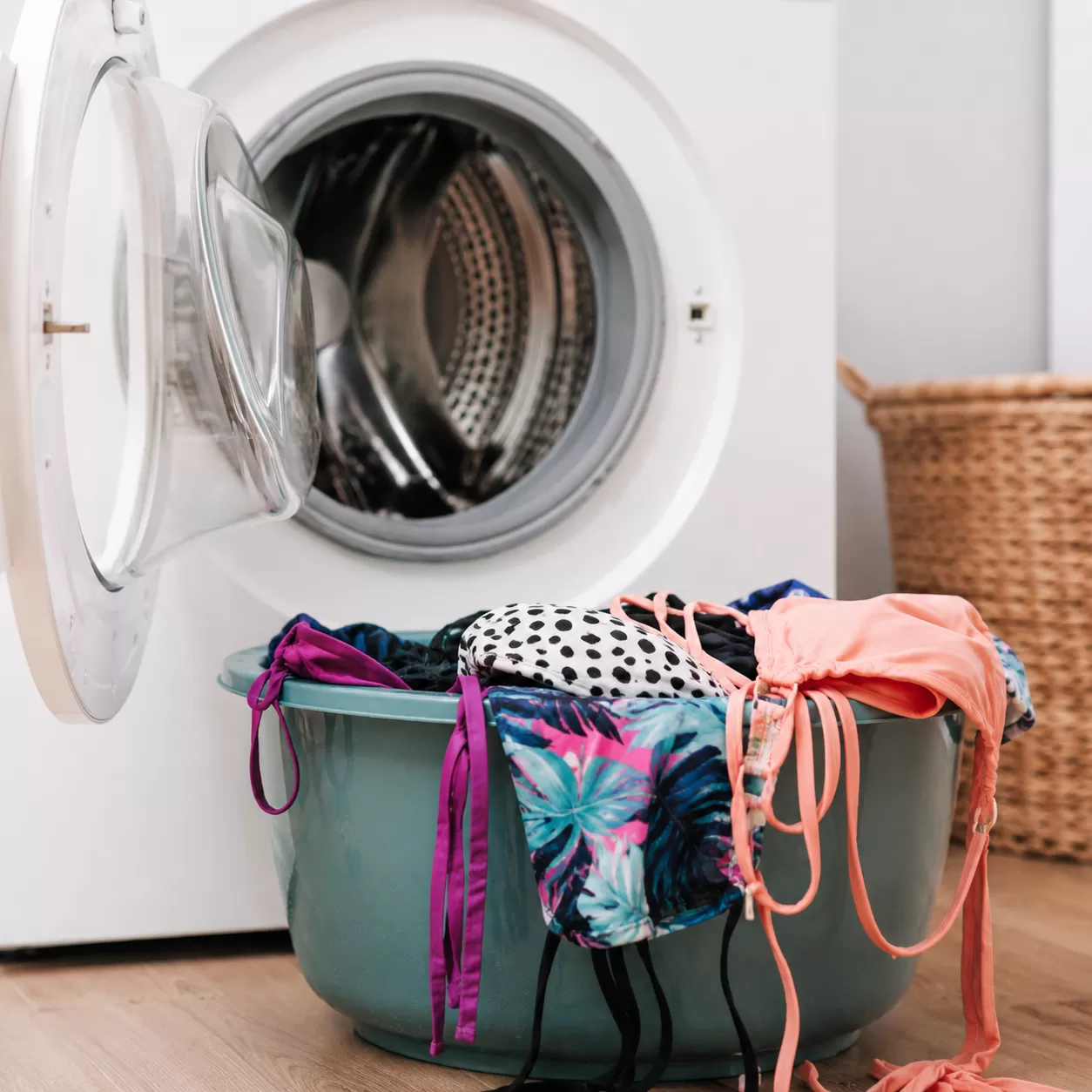
Trying to fix tight bikini bottoms can backfire fast with the wrong approach. Swim fabric is delicate, and one wrong move can permanently warp a suit. When learning how to stretch out bikini bottoms, steer clear of these three mistakes.
The Scorched-Earth Mistake
Never use high, direct heat — no clothes dryer, iron, or boiling water. Above about 150°F (65°C), the spandex melts and stops recovering, leaving you with a brittle, misshapen suit instead of a comfortable one.
The Aggressive Wring
It’s tempting to twist a wet suit hard to force a stretch. Don’t. Wringing snaps the internal elastic threads, and a broken band is what actually causes a permanent muffin-top.
The Hanger Stretch Error
Hanging a wet suit on a regular hanger to “stretch overnight” creates uneven pull and warps the leg openings into lopsided shapes.
| Mistake | What it does | Do this instead |
|---|---|---|
| High heat | Melts spandex fibers permanently | Use lukewarm water or a low/cool hair dryer |
| Aggressive wringing | Snaps the elastic threads | Press flat in a towel to remove water |
| Hanger stretching | Warps the shape unevenly | Lay flat or wear damp to mold it naturally |
How to Prevent Tight Bottoms in the First Place
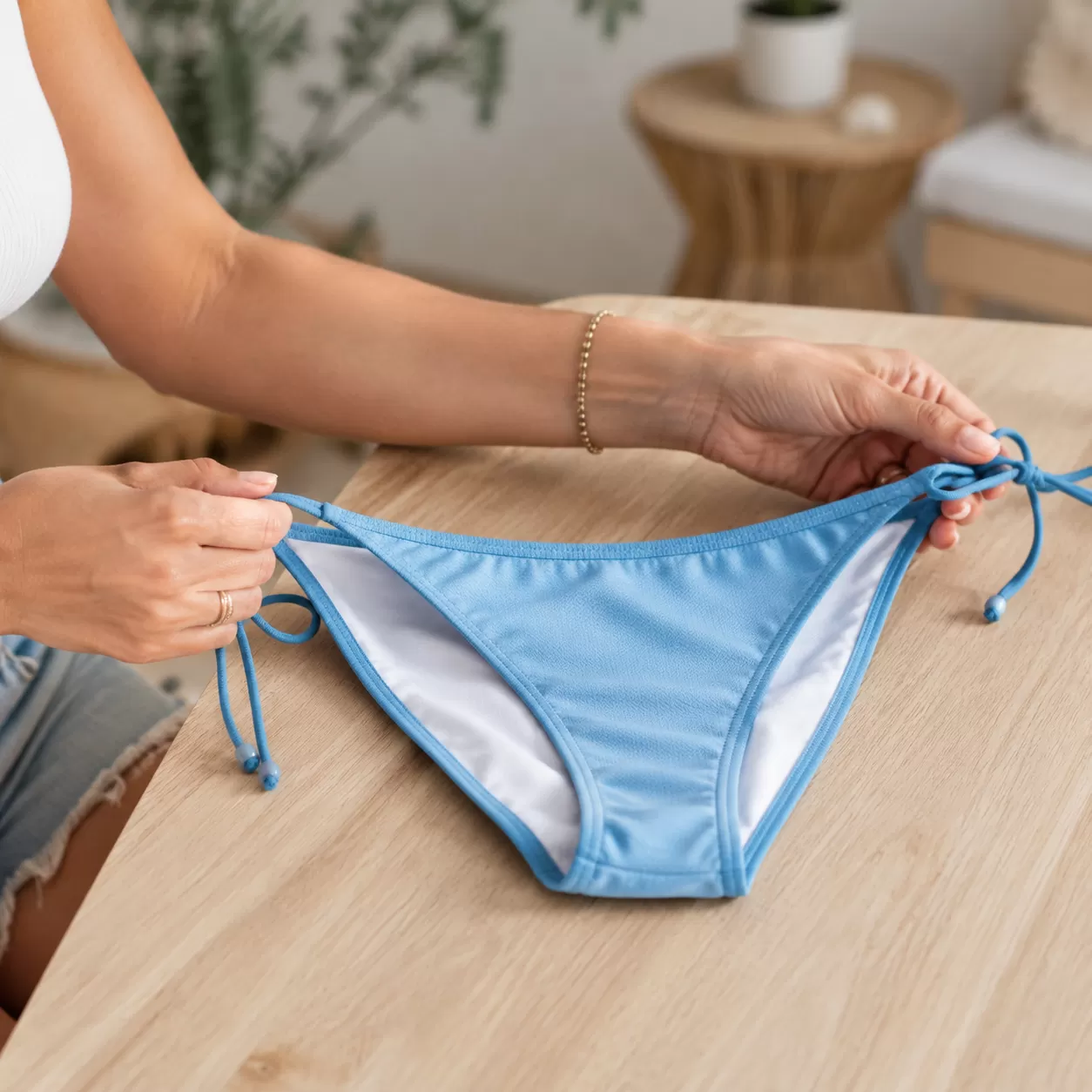
Getting the fit right up front saves you the hassle of stretching anything later — and keeps the dreaded muffin-top away before you even hit the beach.
Pro Tips for Swimwear Longevity
To keep a nylon spandex blend or premium eco-friendly suit from losing its shape, a few simple habits go a long way:
- Rinse right away: After swimming, rinse your suit in cool fresh water to wash out chlorine and salt. Chlorine in particular is an oxidizer that slowly breaks spandex down, so don’t let it dry in.
- Skip the dryer: Always air-dry flat in the shade — both heat and direct sun relax the fibers unevenly.
- Rotate your suits: Give a suit 24 hours to snap back to its original shape before wearing it again.
Choosing Adjustable Styles
If your bottoms tend to dig into your hips, lean toward more forgiving styles next time:
- Tie-side bikini bottoms: the most adjustable — loosen or tighten the waist whenever you like.
- Seamless construction: spreads pressure evenly across your skin so edges don’t cut in.
- High-waisted bands: wide, fabric-covered waistbands are far kinder to skin than thin, exposed elastic.
FAQs on Stretching Out Bikini Bottoms
Do swimsuits stretch out over time?
Yes. A nylon spandex blend or polyester-spandex naturally relaxes with repeated wear and exposure to water, chlorine, and sun. Quality suits hold their shape longer, but you can expect a tight bikini bottom to loosen up a little just from regular use.
How can I loosen swimwear elastic quickly?
The fastest fix is the warm-water soak. Submerge the bottoms in lukewarm water for 15 to 20 minutes to relax the fabric, then gently stretch by hand or wear them damp around the house to mold them to your body.
Can you stretch a nylon spandex blend permanently?
Not at the molecular level — you can’t change the fibers without damaging them — but you can get a lasting, semi-permanent result. Gentle heat from a low hair dryer or a fabric-relaxing spray, applied while you stretch, can make a swimsuit bottom bigger and noticeably more comfortable.



