
We may have ever watched someone effortlessly transition from catching waves to lounging on the sand and wondered how their rash guard swimwear handled it.
But what is rash guard swimwear? In this ultimate guide, we are breaking down exactly what a rash guard is, how to layer it with your favorite bikinis and tankinis, and how to choose the perfect style to elevate your beach wardrobe.
Let’s dive right in.
What Does a Rash Guard Swimsuit Do?
When you are spending the day out on the water, standard swimwear doesn’t always provide the performance or coverage you need. That is where what is rash guard swimwear becomes an essential question for beachgoers and athletes alike.
Originally designed for surfers to protect against surfboard wax abrasion, a rash guard swimsuit serves as a high-performance layer that shields your skin from environmental elements. Today, this essential water sports apparel blends functional utility with beachside style, ensuring you stay comfortable during any coastal activity.
1. Unmatched Sun Protection (UPF 50+)
The primary benefit of a quality rash guard swimsuit is built-in UPF 50+ sun protection. Unlike traditional sunscreen that washes off in the waves, UV protection clothing provides a continuous, reliable block against harmful UVA and UVB rays.
- Blocks 98% of UV Radiation: Safely covers high-exposure areas like your shoulders, back, and arms.
- Chemical-Free Shield: Minimizes the need for constant sunscreen reapplication, making it a sustainable choice for your skin and the ocean reefs.
That 98% figure isn’t a marketing number — it’s defined by the UPF scale itself. A UPF 50 rating means a fabric lets through only 1/50th of UV radiation (about 2%), so it blocks roughly 98%; “50+” is the highest classification a fabric can earn.
UPF is verified by independent laboratory testing under recognized standards: AATCC TM 183 in the United States, AS/NZS 4399:2020 in Australia and New Zealand, and EN 13758-1 in Europe. For an added layer of confidence, look for third-party endorsements such as the Skin Cancer Foundation’s Seal of Recommendation, and note that the American Academy of Dermatology classifies UPF 50+ as “excellent” sun protection.
Good to know: UPF ratings are measured on new, dry fabric. In real-world use, protection can dip when a garment is wet, stretched tight, or worn thin after heavy use, so a rash guard reduces UV exposure rather than eliminating it. It’s still smart to apply a broad-spectrum sunscreen to any uncovered skin (face, hands, lower legs) and to seek shade during peak midday hours. A rash guard is a powerful tool in a sun-safety routine, not a complete replacement for one.
2. Chafing and Abrasion Prevention
Whether you are paddling out on a surfboard, kayaking, or playing beach volleyball, repetitive friction can quickly irritate wet skin.
- Eliminates Friction: Specifically engineered for chafing prevention, acting as a durable second skin between your body and your gear.
- Sand and Wax Barrier: Keeps coarse sand and rough surfboard wax from scraping against your chest and torso, allowing you to stay active longer without discomfort.
3. Light Thermal Warmth and Environmental Shield
Water temperatures and weather conditions can shift rapidly. A snug-fit swim tee offers an effective defense against nature’s unpredictable elements.
- Core Warmth: Provides light thermal insulation to take the chill off cool winds and brisk ocean water.
- Marine Protection: Acts as a physical barrier against stinging jellyfish, sea lice, and minor coral scrapes, keeping you safe while exploring open water.
Rash Guard vs. Traditional Swimsuit: What’s the Difference?

While regular swimsuits are built for casual lounging and catching a tan, a rash guard swimsuit is designed for active protection and performance. If you are trying to understand what sets rash swimwear apart from your standard bikini or one-piece, it comes down to three main factors.
| Feature | Traditional Swimsuit | Rash Guard Swimwear |
|---|---|---|
| Primary Purpose | Tanning, casual swimming, and style | UPF 50+ sun protection, chafing prevention, and durability |
| Fabric Density | Lightweight, prioritizes stretch and aesthetics | Thicker, high-density water sports apparel |
| Coverage | Minimal to moderate coverage | High coverage (arms, chest, and torso) |
| Activity Level | Low to medium (lounging, wading) | High-impact (surfing, paddleboarding, snorkeling) |
Fabric Weight & Density
Traditional swimsuits use lightweight fabrics meant to feel barely there. A high-quality rash guard utilizes a much denser, tighter weave. This heavy-duty fabric structure is what blocks harmful UV rays and creates a tough barrier against surfboard wax abrasion, sand, and reef scrapes. Despite the extra density, the material remains a quick-drying swimwear staple that won’t weigh you down.
Coverage Factor
Standard bikinis and one-pieces leave a lot of skin exposed to the elements. Rash guards flip the script by maximizing skin coverage. Whether you choose a long sleeve rash guard or a short sleeve swim shirt, the extended coverage means you spend less time reapplying sunscreen and more time enjoying the water.
Hydrodynamics
Regular swimwear can shift, drag, or sag during heavy water activities. A proper rash guard functions as a snug-fit swim tee that hugs your body like a second skin. This tight, aerodynamic fit reduces drag in the water, keeps the shirt from riding up, and ensures total freedom of movement while surfing, swimming, or paddling.
How to Wear a Rash Guard: Swimwear Layering Practice

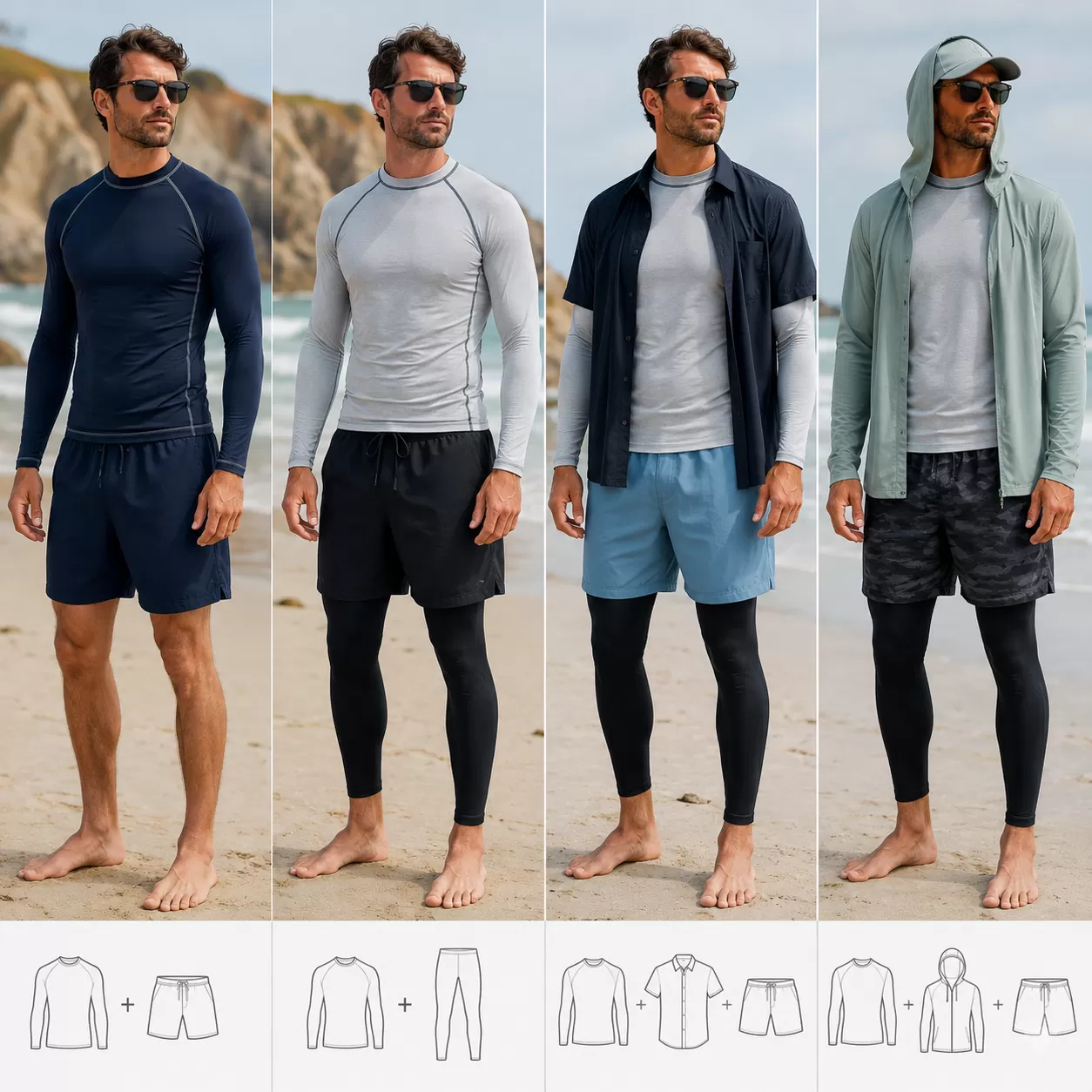
Are Rash Guards Worn Over Swimsuits?
Yes, you can absolutely wear a long sleeve rash guard or short sleeve swim shirt over your favorite bikinis and tankinis layering pieces. It works as an extra protective layer when the sun gets intense or the wind picks up.
However, if your rash guard has built-in support or a shelf bra, you can easily wear it alone as your primary swim top. The choice comes down to personal comfort and how much support you need for your beach activities.
What Do You Wear on the Bottom?
Mix-and-match versatility is exactly why we love water sports apparel. Depending on your vibe, you can pair your swim top with a variety of bottoms:
- Board shorts pairing: The classic choice for surfing, paddleboarding, or extra thigh coverage.
- Bikini bottoms: High-waisted or classic cuts balance out a full-coverage top.
- Swim leggings: Perfect for maximum UV protection clothing setups during long hours on the water.
The All-in-One Solution: One-Piece Rash Guards
For a streamlined, hassle-free option, a one-piece rash guard swimsuit is the ultimate game-changer. This style eliminates the need for separate two-piece rash guard sets and keeps everything securely in place. It gives you a sleek look with full torso coverage, so you never have to worry about your shirt riding up while catching waves or swimming.
Key Features to Look For When Buying a Rash Guard
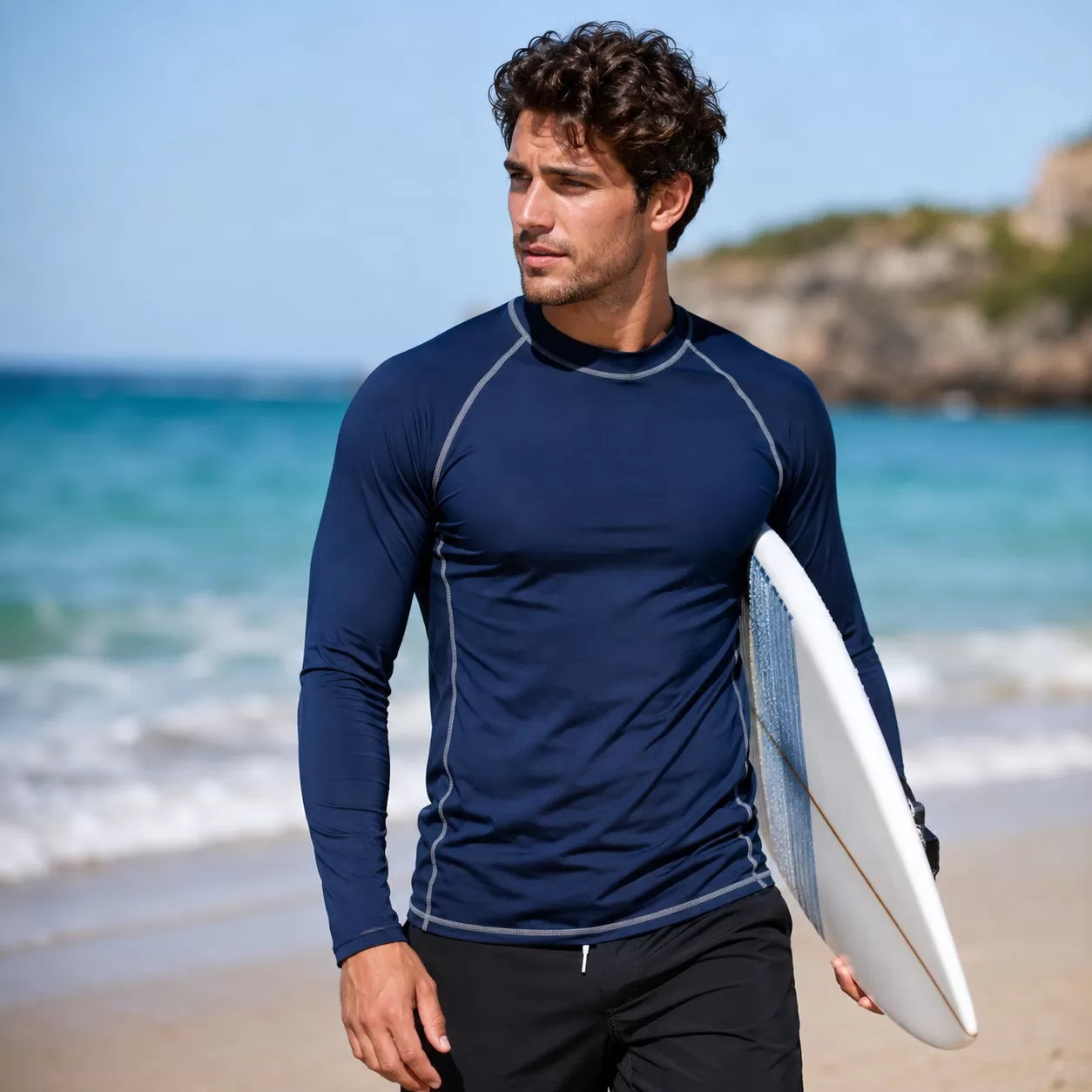
When you are choosing the perfect rash guard swimwear, you need to look past the style and focus on the technical details that deliver real protection and durability. The right fabric blend, construction, and treatments make all the difference when you are out in the waves or lounging by the pool.
Here are the essential features we build into our high-performance swimwear to ensure you get the best fit and longevity.
Material & Fabric Blend
The best water sports apparel relies on a premium blend of synthetic fibers. We use a mix of nylon and spandex or polyester and spandex to achieve the perfect balance of stretch, durability, and comfort.
| Fabric Blend | Key Benefits | Best Used For |
|---|---|---|
| Nylon + Spandex | Ultra-soft feel, superior elasticity, and a body-hugging snug-fit swim tee experience. | Surfing, swimming, and active beach days. |
| Polyester + Spandex | Exceptional durability, high breathability, and excellent resistance to color fading. | Frequent pool use and high-intensity water sports. |
Why these blends? Both polyester and nylon are naturally more UV-resistant than untreated cotton — an unrated white cotton tee measures only around UPF 5, letting roughly 20% of UV through — which is one reason performance swim fabrics are built on synthetic blends rather than cotton.
Both blends deliver crucial quick-drying swimwear performance, keeping you light in the water and warm once you step back onto the sand.
Seamless Comfort: Flatlock Stitching
Standard seams can rub your skin raw when wet, completely defeating the purpose of chafing prevention. We use flatlock stitching across our entire line. This construction technique sews the fabric pieces together flat, eliminating any raised edges.
- Zero Chafing: Seams lay completely flat against your skin to prevent surfboard wax abrasion.
- Maximum Flexibility: The stitching stretches with the fabric, allowing for a full range of motion.
- Heavy-Duty Strength: Flatlock seams are incredibly durable and won’t split under pressure during intense activity.
Chlorine & Saltwater Resistance
A quality rash guard swimsuit is an investment, and it should last longer than a single summer season. Harsh pool chemicals and ocean salt can quickly degrade standard fabrics, causing them to sag, thin out, and lose their UPF 50+ sun protection.
Our gear features specialized chlorine-resistant fabric treatments that seal the fibers. This defensive shield locks out saltwater corrosion and pool chemicals, ensuring your swimwear retains its shape, compression, and vibrant color through hundreds of wears and washes.
How to Choose Your Style: From High-Performance to Chic Leisure
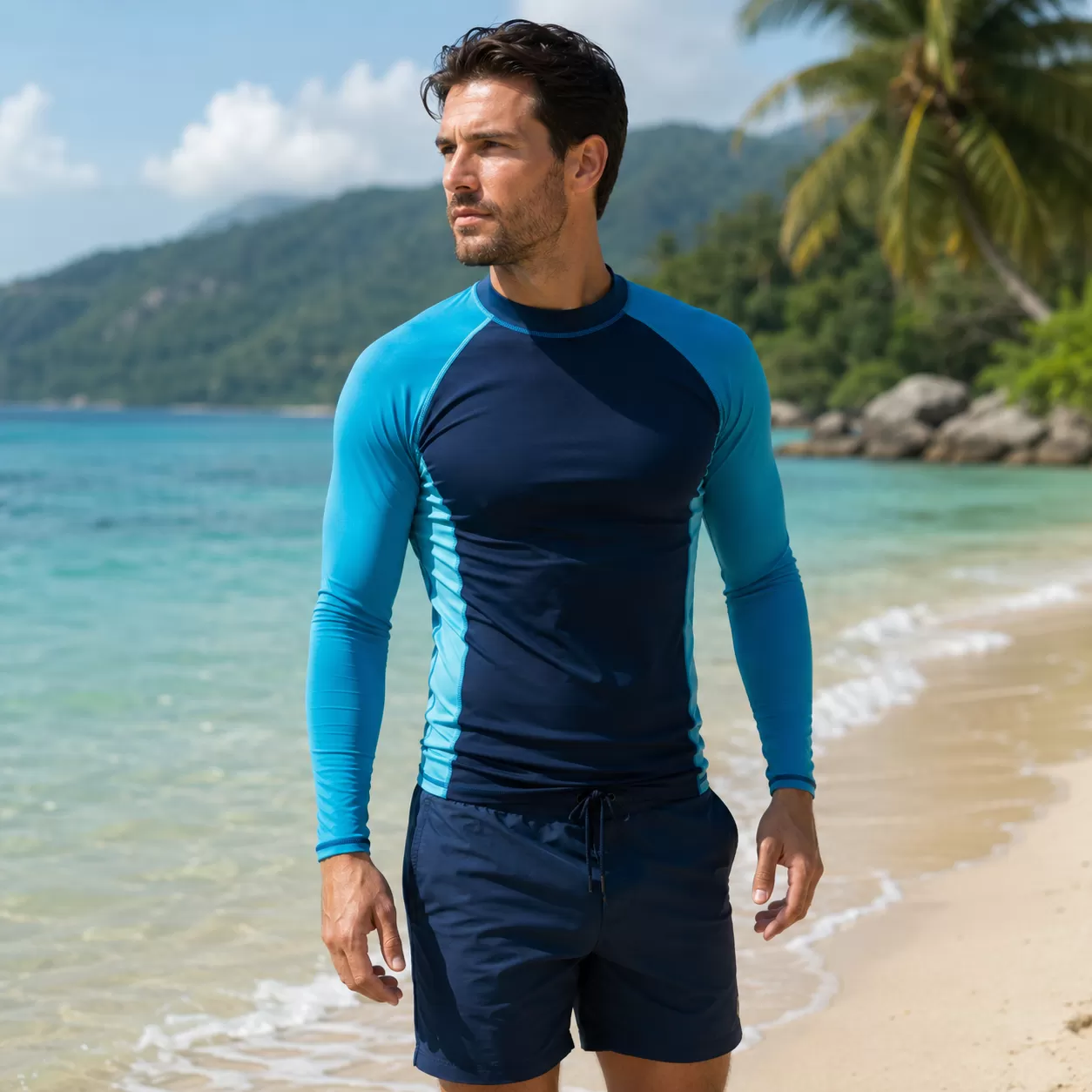
Finding the right rash guard swimwear comes down to how you spend your time in the water. Whether you’re hitting the waves in Malibu or lounging poolside in Miami, your gear should match your vibe and your activity level.
Long Sleeve Rash Guards
For maximum coverage, long sleeve rash guards are the gold standard. These are the go-to for surfers and paddleboarders who need total protection from surfboard wax abrasion and extended sun exposure. We design these with a snug-fit to ensure they don’t bag up or create drag while you’re swimming.
Short Sleeve & Cropped Swim Shirts
If you want more mobility for beach volleyball or just want to stay cool, a short sleeve swim shirt or a cropped rash guard is the way to go.
- Short Sleeve: Great for casual swimming and keeping your shoulders from burning.
- Cropped Styles: Offers a “chic leisure” look that pairs perfectly with high-waisted bottoms, blending fashion with UV protection clothing.
Zip-Up vs. Pullover
The “how it fits” matters just as much as “how it looks.” We offer two main builds to suit your routine:
| Style | Best For | Key Benefit |
|---|---|---|
| Pullover | High-Intensity Sports | Stays securely in place; no hardware to chafe. |
| Zip-Up | Easy Transitions | Easy to take off when wet; works great as a layering piece. |
Whether you need a high-compression fit for a workout or a relaxed swim tee for a boat day, choosing a style that fits your lifestyle ensures you stay comfortable and protected all day long.
Elevate Your Beach Wardrobe with Berlook Swimwear
At Berlook, we design conscious, beautifully tailored protective swimwear that proves you never have to sacrifice style for ultimate sun protection. We know that active days under the sun require gear that performs, which is why our collection blends chic, modern aesthetics with the reliable utility of a high-quality one-piece rash guard swimsuit or versatile two-piece rash guard sets.
Our pieces are thoughtfully crafted for the conscious adventurer, featuring:
- Eco-Friendly Performance: Made with sustainable, chlorine-resistant fabric that holds its shape and vibrant color against harsh saltwater and pool chemicals.
- Tailored Comfort: Designed with premium flatlock stitching to completely eliminate rubbing, ensuring a smooth fit that moves with your body.
- Built-In Defense: Every piece delivers reliable UPF 50+ sun protection to block out harmful UV rays during long surf, paddle, or swim sessions.
Whether you are looking for a sleek long sleeve rash guard for maximum coverage or a breezy short sleeve swim shirt for casual beach days, our swimwear offers the perfect fusion of sustainability, comfort, and effortless style. Upgrade your beach wardrobe with protective apparel that looks as good as it performs.
Sources & Standards Referenced
- UPF testing standards: AATCC TM 183 (United States), AS/NZS 4399:2020 “Sun Protective Clothing — Evaluation and Classification” (Australia/New Zealand), and EN 13758-1 (Europe).
- American Academy of Dermatology — guidance on sun-protective clothing and UPF.
- The Skin Cancer Foundation — sun-protective clothing and the Seal of Recommendation.
Disclaimer: This article is for general informational purposes and is not medical advice. Sun-protection needs vary by individual, skin type, location, and activity. Consult a dermatologist for guidance specific to you.


