
This year, there is a sustained shift toward smaller, lighter swimwear, a.k.a. 'Minimal Bikini' style - You may have grown interest in barely there bikini trend and wish to know further before taking any actions like everybody else did.
But popularity alone doesn’t make a purchase decision naturally easy — as a discreet fashion brand, we observe the difference between a well-made minimal bikini and others comes down to fabric composition, seam construction, and fit precision.
Hence, this guide breaks down every major minimal swimwear style, explains what the fabric specs actually mean for performance, provides a fit-by-body-type comparison, and covers how to style these pieces beyond the beach.
What Makes the Bikini So-called "Smallest"?
When we talk about a "smallest bikini", we're usually talking about styles with super minimal fabric coverage and a light-as-air swimsuits - think clean lines, adjustable fits, and lightweight construction over all that heavy support or full coverage you might be used to.

Some of the most popular minimal swimwear styles include:
- String bikinis - the classic choice
- Micro bikinis - tiny and totally on trend
- Triangle bikini sets - a classic combo
- Brazilian bikini bottoms - a super popular choice
- Thong bikini styles - for when you want to go totally bold
- Tie-side bikinis - a great choice for when you want to show a bit more skin
Each one offers a different balance of style, comfort and coverage - some are perfect for getting a tan, while others are all about relaxing on the beach.
Lately, minimal swimwear has gotten a whole lot more refined. Modern collections are all about soft fabrics, clean tailoring and super stylish designs - so smaller bikinis now feel like a fashion statement, rather than just something to wear to the beach.
Six Minimal Bikini Styles You Can't Miss
Small bathing suits come in many shapes, and not every cut works the same way on every body. String bikinis stay classic, while other styles shift toward bolder lines — some highlight curves gently, others draw sharper attention.
Think comfort first, then shape: details like tie placement matter more than trends, and fit beats fashion once sun and water are involved.
NO.1 String Bikinis

The string bikini is the longtime favorite of the category: small panels of fabric connected by ties at the hips and neck. Its appeal comes from how little it uses, yet it still covers what matters.
Because every tie is adjustable, you can fine-tune the tension at the sides and neck rather than relying on a fixed size — which is why string styles flatter so many different proportions. The bottoms pair naturally with a slim triangle top, and the whole set packs down to almost nothing in a beach bag.
If you want one minimal bikini that works for tanning, swimming, and lounging alike, this is the safest place to start.
NO.2 Triangle Bikini Sets

Some triangle bikinis shape a gentler look than strings do — the same lightweight construction, but with cups cut a touch fuller.
Even though tiny, these styles usually cover a bit more, which gives a steadier, more usable fit when you're just out on the sand. Most modern triangle tops also include removable soft cups, so you can adjust shape and coverage to the occasion.
Light enough to feel barely there, yet still offering more coverage than the tiniest cuts, the triangle set hits the sweet spot for many. Not quite bold, not too shy — just right for anyone wanting less fabric but not the bare minimum.
NO.3 Micro Bikinis

Just like it sounds, micro bikinis push simplicity way further. Tiny panels of fabric define them, built for soaking up sunlight with almost no coverage at all.
You'll see them most around resorts and pools — worn for deep tans or sharp looks rather than real swim sessions. With so little cloth involved, comfort depends almost entirely on what the suit is made of and how closely it follows the body, so fabric choice matters more here than in any other style.
A practical tip: check the elastane percentage before buying — around 18% or higher gives a micro cut the recovery it needs to stay put.
NO.4 Brazilian Bikini Bottoms

Among small swimwear cuts, the Brazilian stands out because it covers less than old-school styles yet keeps more fabric than a thong. The back is cut on a curve that sits between the two — often called "cheeky" coverage — which looks flattering in motion without feeling bare.
Many choose the Brazilian cut because its higher leg line visually lengthens the leg and follows the body's natural curve.
NO.5 Thong Bikini Styles

For those who want the least fabric at the back, thong bikinis sit closest to bare skin. They're a favorite for tanning because they leave almost no lines, and they disappear cleanly under sheer cover-ups.
Some might still find them tricky, yet today’s thong bikinis use gentler materials that feel smooth against the skin. Many are built with bonded, seam-free edges, so they stay put more reliably than earlier generations — comfort has clearly been a focus of their redesign in recent years.
NO.6 Tie-Side Bikinis
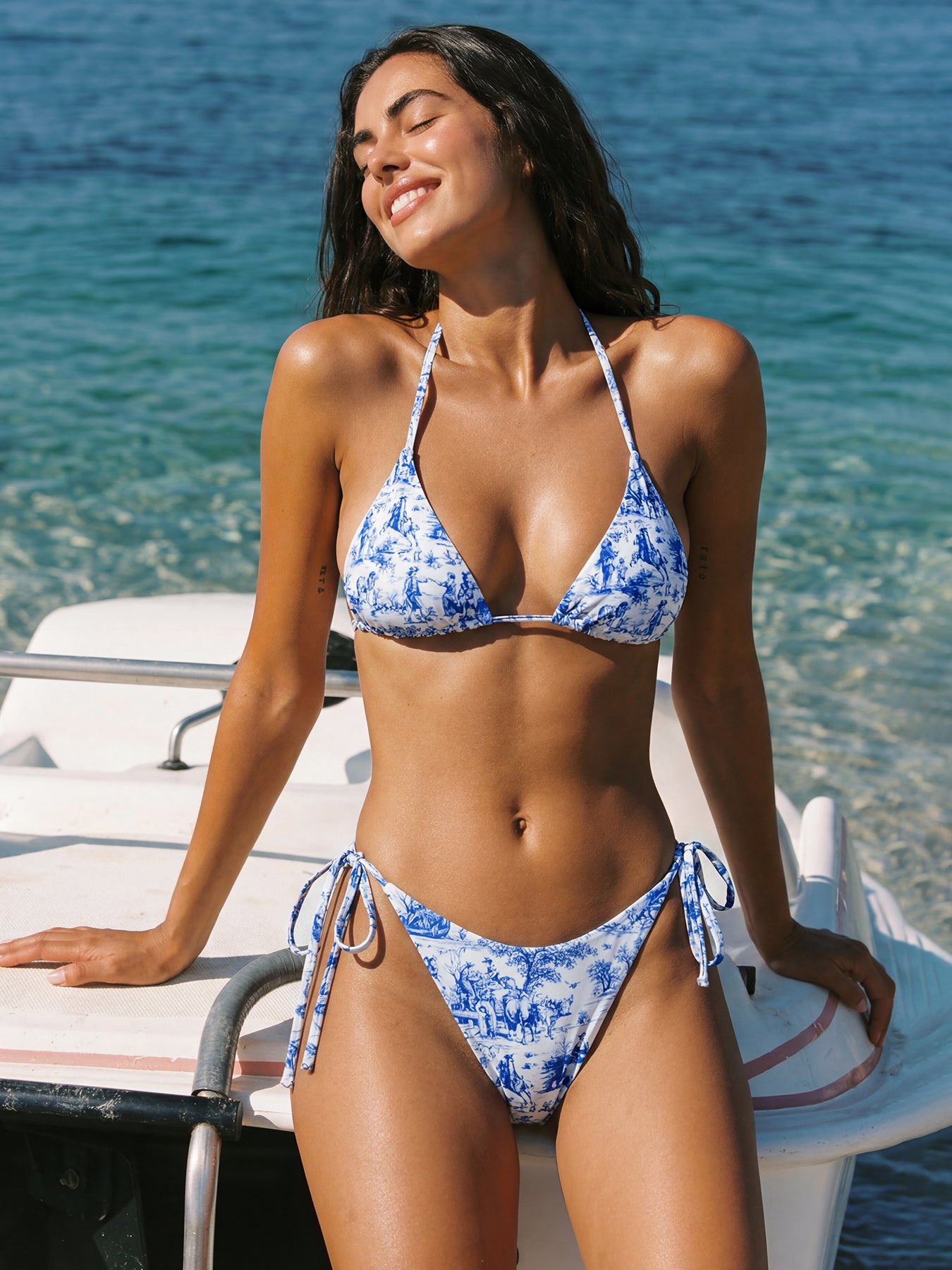
Tie-side bottoms overlap with several of the styles above — string, Brazilian, even thong — because the tie is a construction detail rather than a cut of its own.
The practical benefit is real, though: side ties let you set the exact height and tension on each hip, flex between sizes on in-between days, and control how much skin shows without buying a different suit.
If you're new to minimal swimwear, a tie-side version of any cut is the most forgiving place to start.
Fabrics Compared; Let Specs Truly Help You Choose
Not all swimwear fabric performs equally. This table translates the technical specs you’ll see on product labels into practical terms.
| Fabric Type | Typical Composition | Stretch | Chlorine Resistance | Dry Time | Best For |
|---|---|---|---|---|---|
| Nylon/Lycra® blend | 80% nylon, 20% spandex | 4-way, high | Good (degrades ~200 washes) | 30–45 min | General beach & pool |
| ECONYL® recycled nylon | 78% ECONYL®, 22% spandex | 4-way, high | Excellent | 25–40 min | Eco-conscious; heavy pool use |
| Polyester/spandex | 85% polyester, 15% spandex | Moderate | Excellent | 20–30 min | Lap swimming; chlorine exposure |
| Lurex/metallic blend | 75% nylon, 20% metallic, 5% spandex | Moderate | Moderate (avoid prolonged soak) | 45–60 min | Resort/aesthetic wear; minimal swim |
| Micro-fibre | 88% polyamide, 12% elastane | High | Good | 20–30 min | High-movement; micro styles |
Source: Fabric performance data based on published specifications from Carvico (Italy) and Lycra® brand technical sheets. Dry times are approximate and vary by thickness and environmental conditions.
Which Smallest Style Works for Different Body Types?
The idea that minimal swimwear only works for one body type is outdated. The key is matching the specific cut to your proportions. The table below is a practical starting point — personal comfort always takes precedence.
| Body Type | Recommended Styles | Cut Details to Look For | What to Avoid |
|---|---|---|---|
| Petite / smaller bust | Triangle, string, micro | Removable padding for shape; tie-front for adjustability | Heavily structured cups (overwhelms frame) |
| Larger bust (D+ cup) | Triangle with wider ties, Brazilian bottom | Wider neck ties (15mm+); underwire-optional triangle; strong back closure | Ultra-thin string ties (under 6mm); no support |
| Curvy / fuller hips | High-leg Brazilian, tie-side string | High-cut leg to elongate; tie-side for adjustable fit | Low-rise cuts that sit at the widest point |
| Athletic / straight silhouette | Micro, thong, string | Contrast colour blocking to define waist; ruching at hip | Minimalist solids with no detail (can flatten curves) |
| Long torso | High-cut Brazilian, string (longer ties) | Suits with long-torso options (+1.5 inch length); higher-rise bottom | Low-rise bottoms (visually shortens torso) |
| Short torso | Standard-rise triangle, classic string | Standard or low-rise; horizontal design lines at hip | High-rise bottoms or very high-cut legs |
Whatever your proportions, the difference between "almost right" and "just right" often comes down to what you wear over and around the bikini — which brings us to styling.
How to Style Almost-nothing Swimwear?
Minimal bikinis are most useful when they function as a base layer for a broader beach-to-evening wardrobe. The key is that the simplicity of the swimwear should be enhanced by the texture and volume of the cover-up, not competed with.
Approach #1: Cover-Up Pairings That Work

- Linen overshirt (open): Works with any minimal style. The structure of the shirt contrasts the softness of the bikini. Choose a shirt 2–3 sizes oversized for the right proportion.
- Crochet top or cover-up: Best with solid-colour bikinis — patterned crochet over a patterned bikini creates visual noise. Natural cotton crochet in off-white or sand is a versatile neutral.
- Sarong or pareo (tied at hip or shoulder): Most flattering when it falls to mid-calf rather than the knee. Silk or lightweight rayon drapes better than cotton for a resort-appropriate look.
- Lightweight wide-leg beach trousers: Linen or cotton gauze. Pairs best with a string top or bandeau. Avoid trousers with a very low waist if wearing a high-cut Brazilian bottom — the two hemlines competing creates a cluttered silhouette.
Approach #2: Colour Strategy
In minimal swimwear, colour carries disproportionate visual weight because there is so little fabric. The most versatile palette for investment pieces:
- Neutrals: Off-white, ecru, sand, warm taupe, charcoal, black. These pair with any cover-up and age well across seasons.
- Dusty/muted tones: Sage green, terracotta, dusty rose, slate blue. More personality than neutrals but still cohesive with beachside colour environments.
- What to approach carefully: Neon and bright tropical prints work as accent pieces but are harder to build outfits around. If buying one investment minimal bikini, a neutral base outperforms bold colour.
Approach #3: Accessories

Because the swimwear itself is minimal, accessories read more prominently. A few practical notes:
- Hats: wide-brim straw or woven raffia. Avoid branded caps — they clash with the clean resort aesthetic.
- Footwear: flat leather or woven sandals in tan, cognac, or natural tones. Platform sandals work poolside but are impractical in sand.
- Bags: structured woven totes (seagrass, rattan) or oversized canvas. These balance the lightness of the swimwear with grounded texture.
- Jewellery: waterproof options only — gold-filled or solid gold, surgical steel, or resin. Sterling silver discolours rapidly with sun + salt + SPF exposure.
Bonus Tips: Usual Ways to Care for Your Minimal Bikini
Small pieces put more stress on less fabric — thin straps, fine ties, and narrow elastic all age faster than the panels of a full-coverage suit — so care habits matter more here, not less.
Rinse the bikini in cool fresh water as soon as you're out of the pool or sea; chlorine, salt, and sunscreen are what break down elastane.
Trends Summary
Minimal swimwear works best when you understand the specifics: the right style for your proportions, fabric that performs in your intended setting, and construction details that hold up over a season.
Start with the cut that matches how you'll actually use it — string or triangle for all-round wear, micro and thong for sun-first days, Brazilian for balance — then let the fabric table and fit guide narrow the choice. Cared for properly, a well-made minimal bikini is a small piece that earns its place all summer.
Smallest Bikini FAQs
What is the smallest bikini style?
Micro bikinis use the least fabric overall, and pairing a micro triangle top with a thong bottom is about as small as swimwear gets. String and tie-side styles come close, but keep slightly more coverage and far more adjustability.
Can you actually swim in a micro or thong bikini?
You can, but they're designed more for tanning and lounging than laps. If you plan to move a lot in the water, choose a string or triangle style with secure ties and a fabric with a higher elastane percentage for better recovery and hold.
How should a minimal bikini fit?
Snug but never digging in. Straps and ties should be adjustable, edges should sit flat against the skin, and the suit should stay in place through a quick sit-and-stretch test. If a bottom leaves deep red lines at the hips, go up a size — minimal cuts look better with a relaxed fit than a tight one.
Do minimal bikinis work for every body type?
Yes — the fit guide above exists precisely because the right cut differs by proportion, not because minimal styles are off-limits to anyone. Curvier figures often do best with tie-side and high-leg Brazilian cuts, fuller busts with wider ties and strong closures, and petite frames with removable padding for shape.


